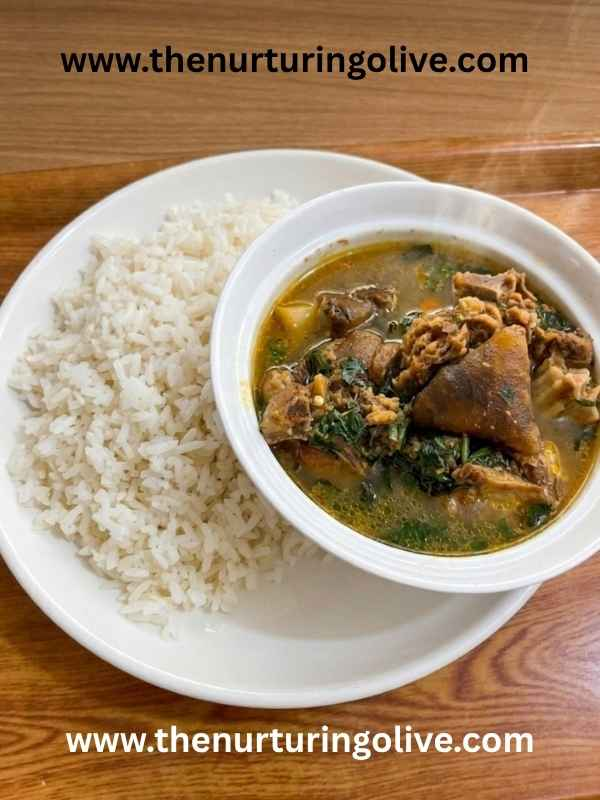
White rice and pepper soup is one of the most relaxing and comforting meals you can enjoy at home. It is the kind of food that makes you sit down quietly, eat slowly, smile to yourself, and feel refreshed afterward.

Although this combination is not as common as white rice and tomato stew or soups like egusi, ogbono, afang, oha, or white soup, Nigerian pepper soup itself is very popular and loved everywhere. Many people enjoy pepper soup by drinking it alone with soft, tender meat as a light and comforting meal. But only a few people know that this same flavorful pepper soup can be paired beautifully with white rice to create a satisfying and complete dish.
Classic Nigerian Egusi Soup Recipe: Step-by-Step Guide from My Family Kitchen
I grew up in a family where pepper soup was something special. Whenever my father had a little extra money and wanted the family to relax and feel happy, he would send me to a nearby pepper soup spot to buy some for everyone. We always enjoyed it so much, as if it was the first time we were tasting it.
Pepper soup was also the regular meal served during some of my father’s meetings with his associates at our house. I hardly remember any other meal being prepared for those gatherings apart from pepper soup. Even my husband still enjoys serving pepper soup during men’s fellowship meetings today.
How to Cook Nigerian Pepper Soup (Step-by-Step Guide and Recipe)
Despite growing up around pepper soup, I never knew it could be eaten with white rice. We always drank it alone and enjoyed the meat with it. It was not until the early days of my marriage that I discovered this beautiful combination.
One day, my husband ordered food for us, and what arrived was pepper soup served with white rice. I was shocked at first, but after tasting it, I immediately fell in love with it. Since that day, I always cook white rice whenever I prepare pepper soup at home.
If you have been wondering how to cook white rice and pepper soup, you are in the right place. Let me walk you through it step by step.
Why People Love White Rice and Pepper Soup
White rice and pepper soup is loved for many reasons:
- It is light but filling
- It is warm and comforting, especially during cold weather or after a stressful day
- It is easy to prepare with simple ingredients
- It is perfect for family meals or quiet evenings
- It helps the body feel relaxed and refreshed
- It is a unique alternative to everyday rice and stew
- Children and adults both enjoy it
Most importantly, it turns a simple bowl of pepper soup into a complete and satisfying meal.
Tools Needed to Cook White Rice and Pepper Soup
For Pepper Soup:
- Cooking pot
- Blender
- Frying pan
- Knife
- Cutting board
- Wooden spoon
- Measuring spoon
For White Rice:
- Bowl (for washing rice)
- Sieve
- Cooking pot
- Spoon
Ingredients for White Rice and Pepper Soup

Pepper Soup Ingredients:
- Goat meat
- Pepper
- Onion
- Garlic
- Ginger
- Scent leaf
- Pepper soup spice
- Ehuru (African nutmeg)
- Uziza seeds
- Seasoning cubes
- Salt
- Water
Rice Ingredients:
- 1 mudu of rice
- Salt (optional)
- Vegetable oil (optional)
Step-by-Step Method: How to Prepare Pepper Soup
To prepare white rice and pepper soup, the first step is to cook the pepper soup. This will serve as the flavorful base that pairs perfectly with the soft white rice.
Follow these steps carefully:
Step 1: Wash the Goat Meat Properly
Wash the goat meat thoroughly using salt and clean water. This helps remove dirt and any unwanted particles before cooking.
Place the washed goat meat inside a cooking pot and set it aside.
Step 2: Prepare the Pepper Soup Spices
Toast the ehuru (African nutmeg) and uziza seeds in a dry frying pan for about five minutes until fragrant.
Allow them to cool slightly, then grind them into a smooth powder using a blender or grinding machine.
Set aside for use later.
Step 3: Prepare the Fresh Ingredients
Wash the fresh pepper properly.
Peel the onions, garlic, and ginger.
Add them into a blender and blend until smooth.
Set the blended mixture aside.
Step 4: Begin Cooking the Goat Meat
Place the pot containing the washed goat meat on the stove.
Add:
- blended pepper mixture
- seasoning cubes
- salt
- ground pepper soup spices
- ground ehuru and uziza seeds
- enough water to cook the meat properly
Allow everything to cook together until the meat becomes tender.
Step 5: Adjust the Soup as It Cooks
As the meat continues cooking:
- stir the soup occasionally
- adjust salt if necessary
- add a little more water if needed
This helps develop the rich traditional pepper soup flavor.
Step 6: Add the Sliced Scent Leaves
When the meat is properly cooked and the pepper soup is almost ready, add the sliced scent leaves.
Stir gently and allow it to simmer for a few minutes.
This gives the soup its fresh aroma and traditional taste.

Step 7: Check the Final Taste and Texture
Taste the pepper soup and adjust seasoning if needed.
Once everything is well combined and the soup smells rich and inviting, your pepper soup is ready.
At this stage, your pepper soup is prepared and can now be served with freshly cooked white rice.
If you would like a more detailed explanation of each step, you can also follow my complete Nigerian pepper soup recipe step-by-step guide.
Next, I will write the Step-by-Step Guide for Cooking Soft White Rice; the correct beginner-friendly Nigerian home method that pairs perfectly with pepper soup.
For a well-detailed step-by-step pictorial guide on how to cook authentic Nigerian pepper soup from start to finish, including ingredient preparation and cooking secrets, click here to read our complete pepper soup recipe.
How to Cook Nigerian Pepper Soup (Step-by-Step Guide and Recipe)
Step-by-Step Method: How to Cook White Rice
Follow these steps carefully for the best results.
This is the same method used in many restaurants to achieve perfectly cooked white rice.
Step 1: Boil Water First
Pour enough water into a pot and place it on the stove.
Allow the water to begin heating while you prepare the rice.
The water should be enough to parboil the rice properly.
Step 2: Wash the Rice Thoroughly
Transfer your rice into a bowl and wash it with clean cold water.
You can add a little salt while washing if you prefer.
Wash the rice at least three times until the water becomes clearer and the rice looks clean.
Unlike the traditional method where rice is washed after parboiling, this method requires washing before parboiling.
This technique helps produce better texture and cleaner rice.
Step 3: Parboil the Rice
Once the water on the stove begins to boil (or is almost boiling), pour in the washed rice.
Cover the pot and allow the rice to parboil for 5 to 10 minutes.
Step 4: Drain the Rice Immediately
Turn off the heat.
Pour the rice into a sieve placed over a bowl to drain out the hot water.
Remove the sieve quickly so the rice does not continue cooking inside the hot water.
This step helps prevent soggy rice.
Step 5: Prepare Fresh Water for Final Cooking
Return the pot to the stove.
Add fresh clean water (about halfway up the pot) and allow it to boil.
At this stage, you may add:
- a pinch of salt (optional)
- a few drops of vegetable oil (optional but recommended)
Do not add palm oil, so the rice remains white in color.
Step 6: Add the Parboiled Rice
Once the water starts boiling properly, transfer the drained rice into the pot.
Do not wash the rice again at this stage.
Leave the pot slightly open while cooking to prevent the rice water from spilling over.
Allow it to cook for 10 to 20 minutes, checking occasionally until the rice becomes soft.
Step 7: Drain Again for Restaurant-Style Results (Secret Method)
Once the rice becomes soft and tender, pour it into a sieve again to drain excess water.
Return the rice back into the empty pot.
Place the pot on very low heat for a few minutes to allow remaining moisture to dry off completely.
You may begin to hear a light drying sound from the pot. This means the rice is ready.
This method is one of the secrets used in many restaurants to achieve separate, shiny, non-sticky white rice.

Alternative Finishing Method (Optional)
If there is very little water left after cooking and the rice is almost done, you may allow it to finish drying inside the pot on low heat instead of draining it again.
Just make sure the heat is low so the rice does not burn.
Your Restaurant-Style White Rice Is Ready
Congratulations!
You have successfully cooked soft, separate, non-sticky white rice using the restaurant-style method.
Your rice is now ready to serve with the freshly prepared Nigerian pepper soup.
This combination makes a simple, comforting, and satisfying Nigerian meal that is perfect for lunch or dinner.
Want to learn how to cook perfectly fluffy Nigerian white rice that is not soggy and not sticky? Click here to read our full beginner-friendly step-by-step white rice cooking pictorial guide.
How to Cook Perfect White Rice That Is Not Soggy or Sticky (Easy Step-by-Step Guide)
Cooking Tips for Perfect White Rice and Nigerian Pepper Soup

To achieve the best results when preparing white rice and Nigerian pepper soup, follow these helpful cooking tips. These practical kitchen secrets will help you cook like a professional and avoid common mistakes.
Pepper Soup Cooking Tips
Wash goat meat properly with salt
Always wash your goat meat with salt and clean water before cooking. This helps remove dirt and improves the taste of the pepper soup.
Toast ehuru and uziza seeds before grinding
Lightly toasting these spices in a dry pan for about five minutes brings out their natural aroma and gives your pepper soup a deeper traditional flavor.
Blend fresh pepper, onions, garlic, and ginger together
Blending these ingredients together helps the flavors combine well and produces a richer pepper soup base.
Add enough water when cooking the meat
Pepper soup is meant to be slightly light and rich in broth, so make sure you add enough water while cooking the meat.
Stir occasionally while cooking
Stirring helps the spices mix properly and prevents ingredients from settling at the bottom of the pot.
Add scent leaves towards the end of cooking
Always add sliced scent leaves at the final stage so they retain their aroma and freshness.
White Rice Cooking Tips (Restaurant-Style Secret Method)
These tips help you achieve clean, separate, non-sticky white rice that pairs perfectly with pepper soup.
Always check rice for stones before cooking
This protects your teeth and ensures your rice cooks smoothly.
Wash rice before parboiling
Unlike some traditional methods, wash the rice first before parboiling. This helps produce cleaner and better-textured rice.
Wash the rice at least three times
Washing the rice three times removes excess starch and helps prevent soggy rice.
Do not wash rice again after parboiling
Once the rice has been parboiled and drained, avoid washing it again. Washing again can affect the final texture.
Make sure the final cooking water is already boiling before adding rice
Adding rice into already boiling water helps the grains cook evenly and prevents them from becoming sticky.
Add a few drops of vegetable oil if needed
A few drops of vegetable oil (not palm oil) help keep the rice grains separate and shiny.
Leave the pot slightly open while cooking
This prevents foam from spilling over the pot during cooking.
Drain excess water after cooking for restaurant-style results
Draining the rice after it becomes soft helps remove extra moisture and prevents sogginess.
Return drained rice to the pot on low heat briefly
Allowing the rice to dry slightly on low heat gives it that professional restaurant-style texture.
Following these simple cooking tips will help you prepare perfect Nigerian pepper soup and soft, separate white rice every time.
Serving Method for White Rice and Pepper Soup

Now that you have finished cooking both the pepper soup and the white rice, it is time to serve and enjoy your meal.
Serving white rice with pepper soup is very simple and straightforward.
How to Serve White Rice with Pepper Soup
Follow these easy serving steps:
- Dish the freshly cooked white rice into a clean serving bowl.
- Dish the hot pepper soup into a separate bowl.
- Place both on the dining table ready to serve.
When eating:
- Take a small portion of the white rice
- Add a little pepper soup on top of it
- Turn it gently with your spoon
- Then enjoy each bite with the rich pepper soup flavor
That is the traditional and most common way this meal is served in many Nigerian homes.
Simple, warm, and very satisfying.
Other Foods You Can Serve with Pepper Soup
Pepper soup is very versatile and can also be enjoyed with other foods if you prefer variety. For example:
- Agidi (eko)
- Boiled yam
- Swallow meals (like fufu or similar options)
These combinations are also very delicious and commonly enjoyed.
Other Foods You Can Serve with White Rice
White rice can also be paired with many other sauces if pepper soup finishes or if you want something different later.
You can enjoy white rice with:
- Tomato Stew
- Vegetable sauce
- Egg sauce
- Ofe akwu (Banga stew)
- Any preferred homemade sauce of your choice
This flexibility makes white rice one of the most useful and reliable meals you can prepare at home.
White rice and pepper soup together create a simple, comforting Nigerian meal that is perfect for lunch, dinner, or even weekend family meals.
Storage Method for White Rice and Pepper Soup
If you have leftover white rice and pepper soup, they can still be stored properly and enjoyed later. However, each one requires a slightly different storage method to maintain its taste and texture.
Follow these simple storage tips below.
How to Store Nigerian Pepper Soup Properly
Pepper soup stores very well when handled correctly.
If you have leftover pepper soup:
- Allow it to cool completely.
- Transfer it into a clean airtight container.
- Store it inside the refrigerator.
When you are ready to eat it again:
- Bring the pepper soup out early and allow it to thaw naturally.
- Pour it into a pot and warm it gently.
- Do not add extra water, because pepper soup already contains enough natural broth.
- Allow it to heat until it begins to boil slightly, then turn off the heat.
Avoid overboiling the pepper soup during reheating, as this can reduce its original flavor and freshness.
When warmed properly, your pepper soup will still taste almost as fresh as when it was first prepared.
How to Store Cooked White Rice Properly
Fresh white rice is always best eaten immediately after cooking. However, if you have leftovers, you can still store them safely.
To store cooked white rice:
- Allow the rice to cool completely.
- Transfer it into an airtight container.
- Store it inside the refrigerator.
How to Reheat Stored White Rice Correctly
When reheating stored white rice:
- Add a small amount of water to the rice
- Heat it using low heat, not high heat
- Stir occasionally while warming
Using high heat can dry the rice quickly and cause some parts to burn while other parts remain cold.
Low heat allows the warmth to spread evenly through the rice and helps maintain its original texture.
If you have access to a food warmer or heater, this method works even better because the heat circulates more evenly and prevents burning.
With proper reheating, the rice will remain soft and enjoyable to eat again.
Frequently Asked Questions about White Rice and Pepper Soup Recipe
Can I use any meat?
Yes, goat, chicken, beef, fish, or assorted meat all work.
Can I eat white rice with pepper soup?
Yes, it is a very delicious Nigerian combination.
Can I store pepper soup?
Yes, refrigerate and reheat gently.
Can white rice be stored?
Yes, but it is best eaten fresh.
Can I add oil to rice?
Yes, a few drops of vegetable oil.
What else can I eat pepper soup with?
Agidi, yam, swallow, or alone.
How do I avoid sticky rice?
Wash rice well and drain properly after parboiling.
What makes pepper soup special?
Its spice blend, warmth, and healing comfort.
Final Thoughts on White Rice and Pepper Soup

White rice and pepper soup is more than just a meal It is a comforting Nigerian food experience that brings warmth, relaxation, and satisfaction in every bite.
From the rich, spicy aroma of the pepper soup to the soft, fluffy texture of properly cooked white rice, this combination creates a perfect balance that many families now enjoy at home. It is simple, yet deeply fulfilling.
For me, discovering this meal changed how I understood pepper soup entirely. What was once only enjoyed as a standalone light dish became a complete family meal that brings everyone to the table. My children especially love it, and it has now become one of those meals we always look forward to at home.
Whether you are preparing it for family dinner, weekend relaxation, or a special moment at home, white rice and pepper soup will always deliver comfort and satisfaction.
If you follow the steps carefully in this guide, you will be able to recreate this delicious Nigerian meal successfully in your own kitchen.
Explore More Nigerian Food Recipes on The Nurturing Olive 🌿
If you enjoyed this recipe, you will also love other delicious Nigerian meals we have shared on the blog. You can explore more step-by-step guides like:
- Nigerian Pepper Soup Recipe (Goat Meat, Fish, Chicken & Assorted Variations)
- Ofe Nsala ( White Soup)
- Smoky jollof rice
- Healthy noodles without seasoning cubes
- Oha soup
- Bitter leaf soup
- Egusi Soup
- Ogbono Soup
- Afang Soup
- Edikang Ikong soup
- Black soup
- Ofe Akwu (Banga Stew)
- Unripe Plantain Porridge
- Kunu Drink
- Zobo Drink
Each of these recipes is written in a simple, step-by-step style to help you cook with ease at home.
At The Nurturing Olive, we also share more than food. You will find:
- Christian devotionals
- Marriage and relationship wisdom
- Parenting and family life encouragement
- Family healthy food & drinks
- Prayer and spiritual growth
- Inspirational stories and drama
Everything is designed to help you build a stronger, peaceful, and love-filled home grounded in faith.
So explore, learn, cook, and grow with us and come back for more nourishing recipes and uplifting content.
Do not forget to subscribe and stay connected for more updates. If you enjoy video content, you can also follow us on YouTube where we share practical cooking and lifestyle guides.
If you enjoy content like this, we would love to stay connected with you. Follow us on Facebook for our daily posts on parenting, faith, family life, and nutritious food ideas that help families live healthier and happier lives.
Facebook: The Nurturing Olive
Thank you for stopping by, and God bless you.

