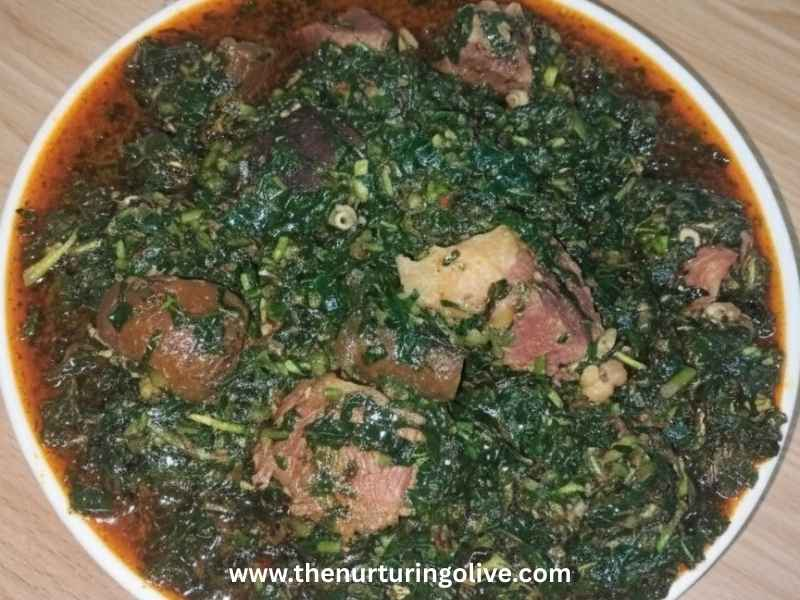
Edikang Ikong soup is one of Nigeria’s richest and most nourishing vegetable soups, proudly rooted in the food culture of the Efik and Ibibio people of Cross River and Akwa Ibom States. It is known for its generous use of fresh vegetables and palm oil, cooked not in a careless way, but with intention, abundance, and respect for the body. This is not just a soup you eat to be full. It is a soup you eat to be well.
Among the many traditional soups in Nigeria like Black Soup, Oha Soup, Ofe Onugbo (Bitter Leaf soup) etc, Edikang Ikong soup stands out as one of the healthiest I know.
It is deeply nutritious, almost medicinal in nature, because it relies heavily on vegetables-waterleaf and pumpkin leaves, combined with quality palm oil, not refined or harmful oils.
If your goal is to feed your family food that nourishes them, strengthens their bodies, and supports long life rather than constant hospital visits, then this soup deserves a permanent place on your menu. Vegetables are packed with essential vitamins, minerals, and antioxidants, and when they are cooked gently and properly, they become powerful tools for healing and wellness.
Click here to learn an authentic step by step method of preparing healthy and nutritious Nigerian Black soup

My First Encounter With Edikang Ikong Soup
Interestingly, I did not grow up eating vegetable soups often. In my Eastern Nigerian home, Edikang Ikong soup was not part of our traditional meals, simply because it was not our tribal soup. My first encounter with it came through one of my mother’s closest friends, Mrs. Elizabeth Aja – may her gentle soul rest in peace. She was not from Cross River or Akwa Ibom either, but one of her children had schooled in that region and learned how to prepare the soup. One day, she cooked it at home and decided to share a bowl with us.
Click here to learn step by step method of how to cook Nigerian traditional Oha soup
I remember that day vividly. I was the one who opened the door when her house help knocked. She handed me the bowl and told me her madam sent it for us.
When I gave it to my mother and she opened it, the entire room seemed to pause. Everything inside the bowl was green like vegetables everywhere. My siblings and I were shocked. This was not the kind of soup we were used to at all. Questions started flying immediately. “Mummy, what kind of soup is this?” “Is this really soup?” “Is it stew?” The curiosity was loud.
My mother smiled patiently and explained that it was a soup we could eat with swallow, just like other soups, but it could also serve as a stew for rice, yam, and other meals. Then came the most important question from us: “Mummy, is it delicious?” She smiled again and said something I have never forgotten: “Even if it is not delicious, what matters is what the food will do for your body. Food is meant to heal, not to destroy. This soup is very nutritious and medicinal.”
Click here to learn an authentic step by step method of preparing healthy and nutritious Nigerian Black soup
How to Cook Healthy Black Soup – Edo State Traditional Nigerian Soup
But to our greatest surprise, it was not just healthy, it was also delicious. We ate and ate and even asked for more. Unfortunately, the bowl had finished. We cried out in disappointment, and by the next day, my mother cooked a full pot just to satisfy our craving. From that day, Edikang Ikong soup became part of us.
Today, it is one of the soups I proudly serve my own family. My children know it well, and it is one of the meals I recommend any time, any day, to anyone looking for truly healthy Nigerian food.
One beautiful thing about this soup is that its main vegetables which are waterleaf and pumpkin leaves are easy to find, whether you are in Nigeria, elsewhere in Africa, or even abroad through African markets. The ingredients are accessible, the process is straightforward, and the result is a meal you can serve with confidence, smiling in your heart because you know your family is eating life.
So if you have ever wanted to learn how to prepare Edikang Ikong soup the right way, rich, nourishing, and full of flavor – come with me. Let me walk you step by step through how to cook this beautiful Nigerian vegetable soup at home and enjoy it with swallow, rice, yam, or whatever you love. Let’s take this ride together.
Related Reading: Healthy No-Sour Tomato Stew: Quick, Delicious, Family-Friendly
Why You’ll Love Edikang Ikong Soup

It is deeply nourishing: With its generous use of fresh vegetables and natural palm oil, this soup delivers real nutrients that support strength, vitality, and overall well-being.
Supports a healthy lifestyle: Edikang Ikong soup is one of those meals that satisfies hunger while still caring for the body, making it ideal for families focused on wholesome eating.
It fits many meals effortlessly: Whether served with swallow, rice, yam, or even enjoyed as a rich vegetable stew, it adapts beautifully to different preferences.
Easy to source ingredients: The core vegetables are widely available in Nigerian markets and African stores abroad, making this soup practical no matter where you live.
Rooted in culture and love: Beyond nourishment, this dish carries tradition, warmth, and the quiet joy of serving food you know is truly good for your family.
How to Cook Traditional Nigerian Oha Soup | Authentic Step-by-Step Recipe
Ingredients for Edikang Ikong Soup

These ingredients come together to give Edikang Ikong soup its bold flavor, rich color, and impressive nutritional value. Quantities can be adjusted to suit your household.
Waterleaf (Gbure / Malabar Spinach)
This forms the tender, juicy base of the soup. It adds natural moisture, body, and a subtle sweetness that balances the oil and spices.
Pumpkin Leaves (Ugu)
Finely sliced ugu gives the soup its signature deep-green appearance while enriching it with iron, vitamins, and fiber.
Palm Oil (preferably freshly milled)
A generous amount of palm oil defines Edikang Ikong soup. Fresh palm oil delivers the best color, aroma, and healthful nutrients.
Assorted Meat or Protein of Choice
Beef, goat meat, cow meat, stockfish, dry fish, or periwinkle all work beautifully. Combining proteins deepens the flavor and makes the soup more satisfying.
Stockfish
This adds depth and a distinctive traditional taste that gives the soup its authentic character.
Dry Fish
Properly cleaned and soaked, dry fish brings a smoky richness that complements the vegetables perfectly.
Periwinkle (optional but traditional)
Periwinkle adds texture and a mild seafood flavor that many people love in classic Edikang Ikong soup.
Iru (Locust Beans) Optional
Though optional, iru adds a bold, earthy richness and boosts the soup’s nutritional profile. It’s a personal favorite in vegetable soups, enhancing both taste and depth.
Crayfish (ground)
Crayfish provides an earthy aroma and unmistakable Nigerian flavor that ties everything together.
Fresh Pepper (to taste)
Blended fresh pepper gives warmth and liveliness. Adjust according to your spice tolerance.
Onions
Onions add natural sweetness and help balance the bold flavors in the soup.
Seasoning Cubes
Used moderately to enhance flavor without overpowering the vegetables.
Salt (to taste)
Adjust carefully, especially since stockfish and dry fish already contain salt.
Water or Meat Stock
Used sparingly, as the vegetables naturally release moisture during cooking.
Related Reading: Healthy noodles without seasoning sachet
Tools Needed
Nothing complicated, just simple kitchen tools to keep the cooking process smooth and enjoyable.
A medium to large pot, depending on the quantity you’re preparing.
Sharp Knife
For neatly slicing vegetables and cutting meats.
Chopping Board
Keeps preparation organized and hygienic.
Blender or Grinding Tool
For blending pepper, onions, and crayfish if they’re not already ground.
Bowl or Colander
For washing and draining the vegetables thoroughly.
Wooden Spoon or Cooking Spoon
Ideal for gentle stirring without bruising the vegetables.
Related Reading: Shrimp and vegetable kebabs with whole-grain couscous
Step-by-Step Method for Preparing Edikang Ikong Soup
This is one of the simplest and most straightforward methods for cooking Edikang Ikong soup, and it delivers a rich, beautiful result every time. The key is proper preparation and calm cooking. Once everything is ready, the actual cooking moves very fast.


Step 1: Assemble and Prepare All Ingredients
Before turning on the stove, make sure every ingredient you need has been washed, measured, sliced, or blended as required. Soups always turn out better when nothing is rushed, and everything is ready ahead of time.
This includes washing and slicing your vegetables, cleaning your proteins, blending ingredients that need blending, and setting everything within reach.
Once this is done, you are already halfway there.
Step 2: Wash and Boil the Protein
Wash your chosen protein thoroughly. For this particular pot, I cooked with beef and omo (cow skin) only. While you can use goat meat, stockfish, dry fish, fresh fish, or a combination, I did not include them in this version.
Place the washed meat into a pot. Add:
- Sliced onions (I used one red onion here)
- Seasoning cubes
- Salt to taste
- A little pepper (optional)
- A small amount of water
This soup does not require much water. Waterleaf releases a lot of moisture on its own, so excess water at this stage will make the soup watery later.
Allow the meat to cook until soft and well seasoned.
If you are using stockfish, it can be added at this stage because it needs time to soften.
If using fresh fish or dry fish, do not add them now. They should only be added when the meat is almost done to prevent breaking apart.
Once the meat is soft, set it aside with its stock.
Step 3: Wash and Slice the Vegetables
Wash the waterleaf and ugu (pumpkin leaves) thoroughly to remove sand and dirt.
Slice both vegetables finely.
Set them aside in separate bowls. These are the only leaves used in authentic Edikang Ikong soup, and they must be handled gently to preserve their nutrients.
Related Reading: Sheet-pan chicken thighs with Brussels sprouts and butternut squash
Step 4: Blend the Ingredients
Blend together:
- Crayfish
- Pepper
- Half a red onion
- Iru (locust beans), if using
Blend roughly, not too smooth, to keep the texture rich and traditional. Set aside.
Step 5: Start Cooking the Soup Proper
Place a clean, dry pot on medium heat and allow any moisture inside to dry off completely.
Add palm oil. Be generous, depending on the quantity you are cooking. This soup is known for its rich oil content, but you can always adjust later.
Once the oil warms slightly (do not overheat), add the remaining sliced red onion. Stir briefly.
Immediately add the blended mixture. Stir and allow it to steam gently for a few minutes so the flavors come together.
Step 6: Add Periwinkle and Meat
Add your cleaned periwinkle (with or without shell, depending on preference). Cover and allow it to simmer for about 5 minutes.
Next, add the cooked meat along with its stock. Stir well and allow everything to simmer for another 5 minutes.
At this stage, check the texture.
The soup should not be watery. If there is excess liquid, allow it to simmer uncovered for a bit until it reduces.
How to Make the Healthiest Fresh Tomato Stew (No Sour Taste, No Stress)
Step 7: Add the Vegetables (Correct Order Matters)
Add the waterleaf first. Waterleaf contains a lot of moisture and needs time to release its water and reduce.
Stir and allow it to cook for a short while until the excess moisture reduces slightly.
Once that happens, add the ugu leaves. Stir gently.
If you feel the oil content is low and you prefer that rich palm oil finish, this is the right time to add a little more palm oil.
Step 8: Final Adjustment and Turn Off Heat
Taste the soup and adjust salt or seasoning if needed.
You may also add a little more crayfish if you love a deeper flavor.
Allow the soup to simmer for no more than one minute, then turn off the heat.
Your Edikang Ikong soup is now ready.
Do not overcook the vegetables. The soup should remain green and vibrant. This helps preserve nutrients and keeps the taste fresh.
Related Reading: Shrimp and vegetable kebabs with whole-grain couscous
Serving Method

Served with traditional swallows
Edikang Ikong soup is most commonly enjoyed with Nigerian swallows such as garri (eba), fufu, semolina, starch, or pounded yam. The thick, vegetable-rich texture makes it easy to scoop, while the rich palm oil and protein give each bite depth and satisfaction. This is the classic way the soup is eaten and remains a family favorite.
Paired with boiled tubers
This soup goes very well with boiled white yam, cocoyam, or ripe plantain. When served this way, the soup acts almost like a rich vegetable sauce, coating each piece and making a simple meal feel complete and nourishing.
Served with rice as a vegetable stew
Edikang Ikong soup can also double as a stew for white or brown rice. Because it is thick and flavorful, there is no need for an extra sauce. This option is especially good for those who prefer rice meals but still want the health benefits of leafy vegetables.
Enjoyed on its own for a light, healthy meal
For those watching their weight or simply eating light, Edikang Ikong soup can be eaten without any swallow or starch. With its generous vegetables, protein, and healthy palm oil, it is filling enough to stand alone as a complete meal.
Served at gatherings and special occasions
Because of its rich look, deep flavor, and health benefits, this soup is also perfect for family gatherings, Sunday meals, and special occasions. It serves well in large portions and leaves guests feeling satisfied without heaviness.
How to Cook Healthy Black Soup – Edo State Traditional Nigerian Soup
Health Benefits of Edikang Ikong Soup

Edikang Ikong soup is more than just a delicious Nigerian delicacy. It is a deeply nourishing meal that supports the body in many ways.
Rich in vitamins and minerals
The generous use of waterleaf and pumpkin leaves (ugu) provides essential vitamins such as A, C, and K, along with iron, calcium, and magnesium that support blood health and strong bones.
Supports digestion and gut health
The high vegetable content supplies natural fiber, which aids digestion, prevents constipation, and promotes a healthy gut.
Boosts immunity naturally
Fresh vegetables, crayfish, onions, and pepper work together to strengthen the immune system and help the body fight infections.
Related Reading: Sheet-pan chicken thighs with Brussels sprouts and butternut squash
Promotes heart health
When prepared with fresh palm oil in moderation, Edikang Ikong soup provides healthy fats and antioxidants that support heart function and help reduce bad cholesterol.
Supports weight management
This soup is filling yet low in processed carbohydrates. It can be eaten with little or no swallow, making it ideal for people trying to maintain or lose weight.
Builds and repairs body tissues
The proteins from meat, fish, periwinkle, and crayfish help in muscle growth, tissue repair, and overall body strength.
Medicinal and healing properties
Traditionally, Edikang Ikong soup is regarded as medicinal because of its vegetable density. It nourishes the body deeply and supports overall wellness rather than causing heaviness or fatigue.
Healthy Noodles Without Seasoning Sachet: A Delicious, Family-Friendly Homemade Recipe
Frequently Asked Questions (FAQs) About Edikang Ikong Soup
Is Edikang Ikong soup healthy?
Yes, it is one of the healthiest Nigerian soups. Its heavy vegetable content, natural palm oil, and quality protein make it both nutritious and balanced.
Can I cook Edikang Ikong soup without waterleaf?
Waterleaf is a key ingredient because it adds moisture and softness. However, in places where it is unavailable, spinach can be used as a substitute, though the taste and texture will slightly differ.
Is Edikang Ikong soup good for weight loss?
Yes. When eaten with little or no swallow, Edikang Ikong soup is very suitable for weight management due to its fiber-rich vegetables and protein content.
Can I add iru (locust beans) to Edikang Ikong soup?
Yes, iru is optional but highly recommended if you enjoy its rich aroma and nutritional value. It enhances the depth of flavor without overpowering the vegetables.
How do I prevent the soup from becoming watery?
Avoid adding too much water while cooking the meat. Waterleaf already releases moisture, so allow it to steam and reduce slightly before adding the pumpkin leaves.
Can Edikang Ikong soup be eaten with rice?
Yes. It works well as a vegetable stew for white or brown rice and can also be served with boiled yam or plantain.
How long can Edikang Ikong soup be stored?
When refrigerated properly, it can last 2-3 days. Reheat gently to preserve the color, texture, and nutrients of the vegetables.
Related Reading: Turkey-burger lettuce wraps with grilled zucchini and carrot slaw
Final Thoughts On Edikang Ikong Soup

Edikang Ikong soup is more than just a meal, it’s a celebration of health, culture, and family. From the first bite, you can taste the richness of fresh vegetables, the depth of perfectly cooked proteins, and the vibrant aroma of palm oil and optional iru. This soup nourishes the body, delights the palate, and warms the heart, making it a perfect choice for any family meal.
Introducing Edikang Ikong soup to your kitchen is not just about cooking but also creating memories. It’s about serving a meal that brings your loved ones together, knowing that every spoonful is packed with nutrients, love, and care. Whether enjoyed with swallow, yam, rice, or on its own, this soup proves that healthy food can be indulgent, satisfying, and deeply comforting at the same time.
So, gather your ingredients, follow the simple steps, and bring this iconic Nigerian delicacy to your table. Your family will not only enjoy the flavors but will also benefit from the wholesome goodness that Edikang Ikong soup offers. Once you make it, I assure you, it will become a beloved staple in your home, just as it has in mine.
Related Reading: Mediterranean quinoa salad
Before You Go…
Now that you’ve learned how to prepare Edikang Ikong soup step by step, I hope you feel inspired to bring this wholesome, nutrient-packed meal into your own kitchen. Whether it becomes a family favorite for Sunday lunches, a healthy option for dinner, or a special treat for gatherings, let it remind you that cooking real, nourishing food doesn’t have to be complicated, it just takes care, intention, and love.
If you enjoyed this guide, there is so much more waiting for you here on The Nurturing Olive. Take a moment to explore some of our other food blog posts, including:
- How to Make the Healthiest Fresh Tomato Stew (No Sour Taste, No Stress)
- How to Process Cocoyam for Soups the Traditional Nigerian Way
- How to Cook Traditional Nigerian Ọha Soup (Authentic Step-by-Step Recipe)
- Turkey Burger Lettuce Wraps with Grilled Zucchini & Carrot Slaw
- Sheet-pan chicken thighs with Brussels sprouts and butternut squash
- Healthy Mediterranean Quinoa Salad with Chickpeas & Feta
- Palm Oil Jollof Rice and Beans
- One-Pot Chicken Sausage Spinach Pasta
And because food and family are deeply connected, you may also enjoy some of our family-centered, faith-rooted posts, such as:
- Godly Parenting Tips for Everyday Life
- Marriage Lessons for Peaceful Homes
- How to Balance Faith and Education at Home
- How to Raise Kids Who Love Jesus
Please take your time, explore, and enjoy. There’s always something special waiting for you here and don’t forget to subscribe so you won’t miss new recipes, family posts, and kitchen inspiration shared with care and love.
Thank you so much for stopping by today. I truly appreciate you always.
Also, don’t miss our Godly films on YouTube. They are stories that bring faith to life in powerful, relatable ways. They’ll encourage you, inspire you, and help you see God’s hand in everyday moments.
Watch here: Christ Love Crusaders Ministries YouTube Channel

