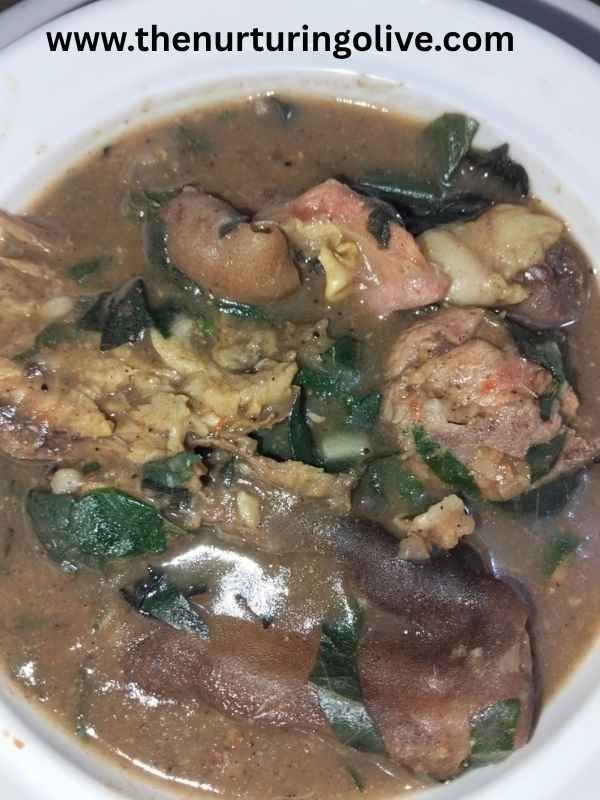
This authentic Nigerian white soup recipe is simple to prepare and perfect for anyone learning how to make Ofe Nsala at home. As a Nigerian woman from the Southeast, an Igbo woman to be precise, I must tell you for sure that whenever I think of an authentic Ofe Nsala recipe, my heart already leans toward warmth, comfort, and something deeply nourishing.

Ofe Nsala, popularly known as White Soup, is one of those traditional dishes that once you learn how to prepare properly, you will always find yourself craving it again and again. Ofe Nsala is a traditional soup just like Black soup, Ofe oha (Oha soup), Ofe Onugbu (Bitter leaf soup), Afang soup etc
How to Cook Healthy Black Soup – Edo State Traditional Nigerian Soup
It is soothing. It is nourishing. Above all, it is healing.
Whenever I am preparing this dish, I have a little tradition with my children. I always bring them close and give them a taste of one of the special leaves used in cooking it especially the utazi leaf. Most times, I never omit it unless I am in a place where it is not available. They will take a bite and immediately shout, “Mummy, it is bitter!” And I will smile and tell them, “Yes, it is bitter… but it is also medicinal.” We laugh about it every single time, because deep down, I know we are eating food that carries healing within it.
Many of the spices and traditional ingredients used in preparing Ofe Nsala are not just for flavor; they are deeply medicinal. That is one of the reasons this soup has always been respected in Igbo culture.
The History and Cultural Background of Ofe Nsala (White Soup)

Traditionally, the classic Ofe Nsala recipe was not just an everyday meal. In earlier times, it was specially prepared for women who had just given birth. It was believed to help cleanse the body, support recovery, and restore strength after childbirth. Because of the spices used in it, it was also considered a healing soup that helped the body return to balance and wellness.
Even today, Ofe Nsala and pepper soup remain among the most recommended traditional meals for new mothers in many Igbo communities, especially in the Southeast of Nigeria.
One of the key features of Ofe Nsala is its natural thickening method. Pounded yam is used as the main thickener, giving the soup its light but slightly rich consistency. A small portion of yam is boiled, pounded, and gently dissolved into the soup, helping to give it body without making it heavy.
Unlike many other Nigerian soups such as egusi or ogbono, which are made with palm oil or palm fruit extract that give them a deep reddish or dark appearance, Ofe Nsala is prepared without any palm oil at all. Instead, it relies purely on spices, meat, and natural ingredients for its flavor.
Classic Nigerian Egusi Soup Recipe: Step-by-Step Guide from My Family Kitchen
This is exactly why it is called white soup. Because there is no palm oil added, the soup does not take on the usual yellow or reddish color seen in most traditional Nigerian soups. Instead, it maintains a light, clean appearance, which makes it visually distinct and unique.
This simple but important difference is part of what makes Ofe Nsala special. It is light in appearance, yet rich in taste and nourishment.
Why Ofe Nsala (White Soup) Is So Special

Ofe Nsala is widely believed to originate from the Igbo people, especially in areas like Anambra State, where it remains a cherished traditional dish passed down through generations.
It is simple to prepare, yet rich in taste. It is spicy, nourishing, and deeply satisfying. And because it is versatile, you can prepare it with different proteins such as catfish, chicken, goat meat, or assorted meats-yet the process remains largely the same.
So whether you are searching for:
- how to make Ofe Nsala with catfish
- Ofe Nsala with chicken
- Ofe Nsala with goat meat
- or assorted meat white soup
This recipe will guide you step by step.
Let’s Cook Together
So if you are here because you are searching for a complete Ofe Nsala recipe, then you are in the right place.
Let me hold your hand.
We are going to go step by step and prepare this beautiful traditional white soup from scratch. It’s very simple, authentic, and full of flavor.
Whether you are cooking it for your family, your husband, your guests, or even just for yourself, one thing is certain: when you master Ofe Nsala, you will always come back to it.
How to Cook Traditional Nigerian Oha Soup | Authentic Step-by-Step Recipe
Kitchen Tools Needed for Ofe Nsala (White Soup)
Preparing this Ofe Nsala recipe is very simple because it does not require many complicated kitchen tools. In fact, most of what you need are basic kitchen items you likely already have at home.
Here are the essential tools needed to prepare Ofe Nsala:
1. Cooking Pot
A medium or large pot is needed for cooking the soup. You will also use it for boiling the yam that will later be pounded and used as the thickener.
2. Mortar and Pestle (or Alternative)
This is used for pounding the boiled yam into a smooth paste for thickening the soup.
However, if you want convenience, you can also use:
- Food processor
- Yam pounder (electric or manual)
3. Kitchen Knife
A sharp knife is needed for peeling the yam and cutting the meat, fish, and vegetables.
4. Chopping Board
This is optional but highly recommended for safely slicing vegetables and handling ingredients neatly.
5. Cooking Spoon (Wooden or Metal)
Used for stirring the soup while it cooks to ensure everything blends properly and does not stick to the pot.
6. Small Bowl or Plate
Useful for setting aside ingredients such as spices, crayfish, or chopped vegetables before cooking begins.
Having these ready makes the cooking process smooth and enjoyable.
Ingredients for Ofe Nsala (White Soup)

Servings: Family of 5
Lasts: Up to 3 days when stored properly
Below are the ingredients used for preparing this recipe.
Proteins
- Goat meat – 1 kilogram
- Goat intestine (optional but highly recommended for richer flavour) – 1 kilogram
- Dry fish – 2 large pieces
- Crayfish – about 250 grams
You can also substitute goat meat with:
- Chicken
- Assorted meat
- Fresh fish (especially catfish)
The cooking method remains the same.
Yam (For Thickening)
- Yam pieces – 10 to 12 medium chunks
These are peeled yam pieces cut into medium cooking-size chunks. They help thicken the soup naturally.
Vegetables
- Utazi leaves – very small quantity
- Uziza leaves – a small handful, chopped
Peppers
- Fresh red pepper – to taste
- Yellow pepper (optional alternative) – to taste
Ofe Nsala should be spicy but not overly peppery.
Traditional Spices
- Ehuru (African nutmeg) – about 12 seeds
- Dry uziza seeds – 1 teaspoon
- Ground traditional Nsala spice mix (optional) – 1 tablespoon
These spices give Ofe Nsala its authentic traditional aroma.
Seasoning Ingredients
- Seasoning cubes – 2 to 4 cubes
- Salt – to taste
- Ogiri (locust beans) – 1 tablespoon
Optional substitute:
- Dawadawa – 1 tablespoon
Important Note About Utazi Leaves
Utazi leaves are one of the key traditional vegetables used in Ofe Nsala.
They contribute to the soup’s unique flavour and medicinal quality. However, they must be added very sparingly because of their naturally bitter taste.
If too much is added, the soup may become bitter.
If Utazi leaves are not available where you live, the soup can still be prepared successfully without them.
Step-by-Step Method: How to Make Ofe Nsala (White Soup)
Now that we have gathered all our tools and ingredients, it is time to begin cooking this delicious and nourishing Ofe Nsala. Follow these steps carefully, and if you are preparing this for the first time, take your time and consult the attached images where necessary for guidance.
Let’s cook together step by step.
Step 1: Peel, Wash, and Cook the Yam (Soup Thickener)
Start by peeling the yam you will be using as the thickener.
Cut the yam into medium chunks for easy cooking. Wash the pieces thoroughly and transfer them into a cooking pot. Add enough water to cover the yam completely so it does not burn while cooking.
Place the pot on heat and allow the yam to boil until soft.
You will know the yam is ready when:
- a spoon can easily pierce through it
- it feels soft when pressed
- and it tastes fully cooked when tested
Once done, remove from heat and transfer immediately into a mortar (or food processor/yam pounder).
Pound the yam until:
- all lumps disappear
- the texture becomes smooth
- stretchy and slightly elastic
- and completely seed-free
When it reaches this stage, set it aside. This will be used later to thicken the soup.

Step 2: Wash and Prepare the Proteins
Carefully wash the protein you are cooking with:
- goat meat
- chicken
- assorted meat
- intestines
- or fresh fish
Wash thoroughly and set aside.
If using dry fish:
Soak the dry fish in hot water for 3-5 minutes. This helps:
- soften the fish
- remove impurities
- remove hidden dirt or insects
After soaking, wash again with clean water. Remove the bones carefully, especially if children will be eating the soup. Then set aside.
If using fresh fish:
Wash properly, remove the intestines, cut into desired sizes, and set aside.

Step 3: Toast and Prepare the Local Spices
If you are preparing your spices from scratch (instead of using already blended spice mix), this step is very important.
Lightly toast:
- dry uziza seeds
- African nutmeg (Ehuru)
Place them in a dry frying pan over low heat and stir gently for about 5 minutes.
Toasting helps release their natural aroma and improves the flavour of the soup.
If your African nutmeg still has its shell, break it open and remove the seed before toasting. Discard the shell.
After toasting:
- pound/grind using mortar and pestle
or - blend using a food processor
Set aside.

Step 4: Blend the Pepper and Crayfish
Blend your fresh pepper until smooth.
You may:
- blend pepper separately
or - blend pepper together with crayfish
Either method works well.
Set aside after blending.
Step 5: Wash and Slice the Leaves
Wash your leaves thoroughly using salt water to remove sand and dirt.
Leaves used:
- uziza leaves
- utazi leaves
Slice them into thin strips separately. Do not mix them together at this stage.
Set aside.
Preparing all ingredients before cooking helps your cooking process remain smooth and stress-free. It also prevents the soup from overcooking while you are still preparing ingredients.
Now that everything is ready, let us begin the main cooking process.
Step 6: Start Cooking the Meat Stock (Foundation of the Soup)
Transfer your washed meat into the cooking pot.
Add:
- 1-2 seasoning cubes
- salt to taste
- half of the ground spices
- blended pepper
Add water until it reaches the same level as the meat or slightly above it.
Cover the pot and cook for 5-10 minutes.

Step 7: Add Dry Fish or Stock Fish
After the first cooking stage:
Add:
- dry fish
and - stock fish (if using)
Cook again for another 10 minutes.
If you are using fresh fish instead, do not add it yet so it does not scatter inside the soup.
Step 8: Adjust Water Level Before Thickening
At this stage, check your soup quantity.
If you need more soup volume, add a little more water now.
It is always better to start with less water and adjust gradually than to make the soup too watery.
Allow the soup to return to a boil.

Step 9: Add the Pounded Yam (Thickener)
Start adding the pounded yam bit by bit into the boiling soup.
Stir continuously so it dissolves smoothly without forming lumps.
Do not worry if the soup becomes slightly thick at first. You can still adjust consistency later.
Step 10: Add Ogiri, Remaining Spices, and Crayfish
Now add:
- ogiri (locust bean)
- remaining ground spices
- ground crayfish
- remaining seasoning cubes (if needed)
Stir well and taste the soup.
This is the stage to adjust:
- salt
- seasoning cubes
- pepper level
Make adjustments according to your taste.
Step 11: Add Uda Pod and Fresh Fish (If Using)
Add:
- uda pod. (cut it into chunk or add it whole. Remove from soup before serving)
- fresh fish or smoked fish (if using)
Allow to cook for about 10 minutes.
Step 12: Adjust the Soup Thickness
Check the texture of your soup.
A good Ofe Nsala texture should be:
- not too thick
- not too watery
- medium and smooth
Remember the soup will continue to thicken even after turning off the heat.
Adjust with small water if necessary.

Step 13: Add Uziza Leaves First
Add the sliced uziza leaves first.
Stir and allow them to cook for about 1 minute so they release their aroma into the soup.
Step 14: Add Utazi Leaves Last (Very Sparingly)
Now add the utazi leaves sparingly.
Allow them to cook for 30 seconds to 1 minute only.
Taste the soup. If needed, adjust slightly but avoid adding too much because utazi has a strong bitter taste.
Do not overcook the vegetables. The residual heat of the soup will continue cooking them even after turning off the heat.
Your soup is now ready.
Congratulations! You have successfully prepared Ofe Nsala (White Soup).

How to Cook Healthy Black Soup – Edo State Traditional Nigerian Soup
Serving Suggestions for Ofe Nsala (White Soup)

Ofe Nsala is very versatile and can be enjoyed in several ways.
You can serve it with:
- fufu (most traditional pairing among Igbo families)
- pounded yam
- eba
- semovita
- any swallow of your choice
It can also be enjoyed with:
- boiled yam
- white rice
Some people even enjoy drinking it alone just like pepper soup because it is light, spicy, nourishing, and medicinal.
Ofe Nsala is a comforting soup that supports healing, strengthens the body, and brings families together around the table.
Congratulations for giving this beautiful traditional recipe a place in your kitchen. I hope it becomes one you return to again and again with your family.
How to Store Ofe Nsala (White Soup)

Ofe Nsala stores very well when handled properly.
Allow the soup to cool completely before storage.
Transfer it into a clean container and cover tightly.
Store inside your freezer.
It can last up to one month when frozen properly.
Whenever you want to eat it:
Remove the portion you need and allow it to thaw inside the refrigerator.
Warm it on low heat.
If the soup becomes too thick during reheating, add a small quantity of water to adjust the texture.
Interestingly, Ofe Nsala often tastes even better the next day because the spices blend more deeply over time.
However, avoid refreezing soup that has already been thawed.
Frequently Asked Questions About Ofe Nsala Recipe
Are the whole spice pods inside the soup meant to be eaten?
No.
They are added to improve aroma and medicinal value.
Remove them before serving.
Why is Ofe Nsala not cooked with palm oil?
Because it is traditionally prepared without palm oil.
That is why it is called white soup.
Why is it called Ofe Nsala?
Ofe Nsala is known for its light consistency.
It should not be too thick or too watery.
That balanced texture is part of what defines the soup.
Must I cook Ofe Nsala with both utazi and uziza leaves?
No.
You can cook with either one.
You can cook with both.
Or cook without them if unavailable.
The soup will still taste good.
Must Ofe Nsala be spicy?
Yes, but not overly peppery.
Its spice comes mainly from traditional ingredients like:
- ehuru
- uziza seeds
- local spice blend
Not just fresh pepper alone.
Can I use catfish instead of goat meat?
Yes.
Fresh catfish is one of the most traditional proteins used for Ofe Nsala.
It gives excellent flavour.
Can I cook Ofe Nsala without yam?
Yes.
You can substitute yam with:
- yam powder
- pounded yam paste
But fresh yam gives the most authentic result.
Is Ofe Nsala good for nursing mothers?
Yes.
Traditionally, it is considered nourishing and supportive for recovery after childbirth because of its light texture and medicinal spices.
Final Thoughts on Ofe Nsala (White Soup) Recipe

Ofe Nsala is more than just another Nigerian soup.
It is a soup of comfort, healing, and tradition.
It reminds many of us of home, care, and family warmth.
Learning how to prepare it properly means preserving something meaningful from our culture and passing it forward to our children.
Once you master this recipe, it becomes one of those soups you return to again and again.
Explore More Delicious Recipes From Our Kitchen
If you enjoyed learning how to prepare this Ofe Nsala (White Soup) recipe, you will definitely love some of our other traditional Nigerian dishes already shared here.
You can also check out recipes like:
- Nigerian fried rice
- Smoky jollof rice
- Healthy noodles without seasoning cubes
- Oha soup
- Bitter leaf soup
- Egusi Soup
- Ogbono Soup
- Afang Soup
- Edikang Ikong soup
- Black soup
- Ofe Akwu (Banga Stew)
- Unripe Plantain Porridge
More Than Recipes – Join Our Family Space
And if you are someone who enjoys more than just cooking content, you are warmly welcome to explore our other helpful lifestyle topics too.
We also share parenting stories, marriage content, Prayer & Spiritual Growth, Inspirational Stories & Drama and Christian Living & Faith posts to help and encourage families in different ways.
Do not forget to subscribe and stay connected for more updates. If you enjoy video content, you can also follow us on YouTube where we share practical cooking and lifestyle guides.
If you enjoy content like this, we would love to stay connected with you. Follow us on Facebook for our daily posts on parenting, faith, family life, and nutritious food ideas that help families live healthier and happier lives.
Facebook: The Nurturing Olive
Thank you for stopping by, and God bless you.

