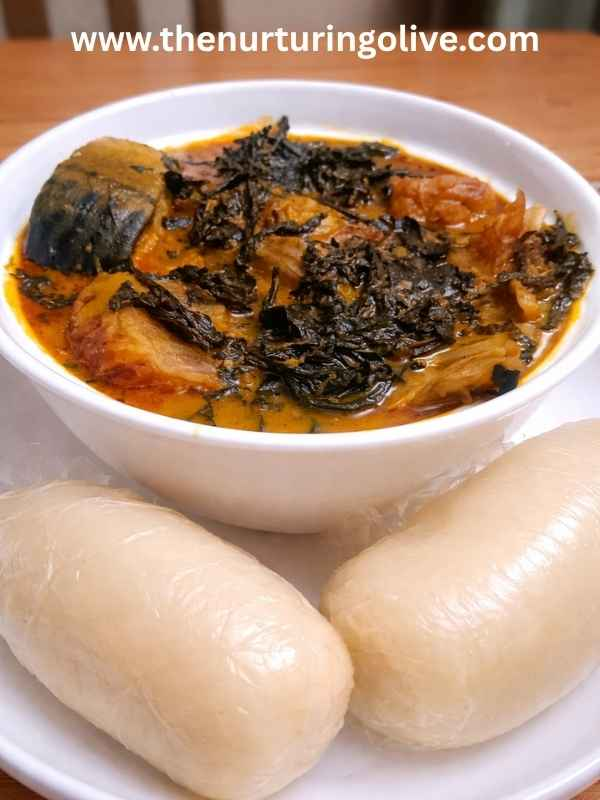
How to cook Ofe Onugbu (Bitter Leaf Soup) is a question many food lovers ask when they first encounter traditional Nigerian cuisine. This rich, deeply flavored bitter leaf soup is one of the most iconic dishes of the Igbo people, and for good reason. It is wholesome, satisfying, and beautifully layered with taste. With the right ingredients, the proper tools, and a spirit of patience, you can recreate this authentic classic right in your own kitchen.

Across many homes in southeastern Nigeria, Ofe Onugbu holds a place of deep respect. It is believed to have originated from Anambra State, where it has long been prepared for family gatherings, traditional ceremonies, and important celebrations. Over time, the popularity of this beloved soup spread across Nigeria and beyond, carried by its deep flavor, nutritional richness, and cultural significance.
Although it is called bitter leaf soup, the properly prepared version is far from bitter. The careful washing of the leaves, combined with cocoyam thickener, palm fruit, assorted meats, and traditional seasonings, creates a soup that is rich, balanced, and deeply satisfying. If you have ever wondered how to cook Ofe Onugbu in a simple and authentic way that delivers the flavors found in traditional Igbo kitchens, this step-by-step recipe guide will walk you through every stage of the process.
Understanding Ofe Onugbu (Bitter Leaf Soup)
Despite its name, bitter leaf soup is not bitter at all. The name comes from the leaf itself, Vernacular amygdalina, which is carefully washed or briefly parboiled to remove all traces of bitterness before cooking begins. This washing process is not optional; it is the foundation of the entire soup. Without it, no amount of seasoning can save the pot.
Most traditional African soups are named after the vegetable that defines them, and Ofe Onugbu is no exception. The bitter leaf is irreplaceable in this recipe. No other leaf can stand in for it. Once properly washed, it transforms into a soft, flavorful green that gives the soup its signature taste, texture, and identity.
Known widely as Ofe Onugbu among the Igbo people, this soup is also enjoyed in other Nigerian communities with slight variations in ingredients and preparation style. Today, it is savored across West Africa and in African homes around the world, where it continues to represent warmth, hospitality, and the beauty of traditional home cooking passed down through generations.
Why Ofe Onugbu Is a Special Soup in Nigerian Homes
Ofe Onugbu (Bitter Leaf Soup) is more than a meal. It is a statement. In many Igbo homes, serving this soup to a guest communicates something that words alone cannot fully express: you are valued, you are welcome, and this house honors you. That is why it appears on the table at weddings, naming ceremonies, title-taking events, and every gathering that carries weight.
Part of what makes this soup so special is that it demands patience. Washing the bitter leaves thoroughly, processing the palm fruit, pounding the cocoyam, and layering each ingredient in the right order are all acts of care. You cannot rush this soup and expect it to be right. That intentionality is part of its character.
Every household also tends to carry its own way of preparing Ofe Onugbu (Bitter Leaf Soup). Some families use more stockfish, others prefer a heavier hand with the crayfish, and a few add a piece of ogiri that has been passed down in a particular form only that home would recognize. These small differences are how cultural identity survives in food. They are the fingerprint of a family.
With cocoyam paste as a natural thickener and the warmth of palm fruit running through every spoonful, Ofe Onugbu delivers a hearty, comforting bowl that pairs beautifully with pounded yam, fufu, semolina, or eba. It is nutritious, deeply flavorful, and worthy of every minute spent preparing it.
A Childhood Memory of Love, Patience, and My Grandmother’s Ofe Onugbu

There are only a few soups like Oha soup, Egusi soup etc, I truly remember watching my loving grandmother, Alice Igwenagoro Okparaejimofor, prepare while growing up, and Ofe Onugbu (Bitter Leaf Soup) was the most unforgettable among them. She had a special grace with this soup. Whenever she cooked it, something about the taste could quietly settle your heart. No matter how scattered your day had been or what life had thrown at you, once the aroma of her kitchen began to rise, peace followed.
How to Cook Traditional Nigerian Oha Soup | Authentic Step-by-Step Recipe
Sometimes I would move closer to her while she cooked, not because I knew how to help, but simply because I loved being near her. The fragrance of the soup was comfort in itself. And like many loving grandmothers do, she would occasionally press small pieces of meat or fish into my hand as she worked. Those quiet moments made the kitchen feel like a place of warmth, learning, and belonging.
My grandmother never rushed her cooking. She handled Ofe Onugbu with patience and intention, a pace that felt very different from the fast cooking we often see today. From her, and later from my mother, I learned that patience is one of the secret ingredients behind truly memorable traditional meals. That is why her soup always came out so rich and so right.
Many of the ingredients she used were freshly harvested from our surroundings. She would go to the farm herself to dig up cocoyam, which she carefully washed, boiled, peeled, and gently pounded to serve as the natural thickener for the soup. She also pressed her own palm fruit and plucked bitter leaves fresh from the compound before washing them thoroughly until they reached the perfect flavor. Watching her prepare each ingredient with that kind of care taught me something I carry to this day: traditional cooking is not just about feeding the body. It is about honoring the process.
Even after my grandmother passed on, Mama, may your loving soul rest in peace, the memory of her cooking remained alive in our home. My mother continued the tradition, preparing Ofe Onugbu (Bitter Leaf Soup) for us in the same careful way. Each time she cooked it, I felt the same joy and comfort I had known as a child. It reminded me that this soup is not just food. It is a heritage, a memory and a living love letter passed from one generation to the next.
Classic Nigerian Egusi Soup Recipe: Step-by-Step Guide from My Family Kitchen
Kitchen Tools Needed to Cook Ofe Onugbu
Before learning how to cook Ofe Onugbu (Bitter Leaf Soup) successfully, it helps to gather the basic kitchen tools required for the preparation process. This soup does not demand complicated equipment. Most of what you need is already sitting in a well-used home kitchen.
Mortar and Pestle: Used for pounding boiled cocoyam, which serves as the traditional thickener for Ofe Onugbu (Bitter Leaf Soup). A food processor or strong blender works as a substitute if needed.
Large Cooking Pot: Needed for boiling cocoyam and palm fruits before processing them.
Soup Pot (Medium or Large): Used for cooking the bitter leaf soup itself.
Sieve or Strainer: For extracting the palm fruit juice after boiling.
Mixing Bowls: Used for washing the bitter leaves thoroughly and cleaning meat or fish before cooking.
Cooking Spoon: For stirring the soup properly during cooking to achieve a smooth, even texture.
Knife and Chopping Board: Used for peeling cocoyam and preparing ingredients before they go into the pot.
Tip: You can use one pot for multiple steps if your kitchen is small. What matters most is not the number of tools you have, but the patience you bring to the process.
Ingredients Needed to Cook Ofe Onugbu

Using the right ingredients is what separates a good pot from a truly memorable one. Below are the ingredients commonly used in preparing authentic Ofe Onugbu (Bitter Leaf Soup.
Main Ingredients
- Cocoyam: The traditional thickener for Ofe Onugbu. Choose firm, fresh cocoyam based on how much soup you are making. Always check that the cocoyam is not rotten before purchasing.
- Palm Fruit (Banga): Gives the soup its rich color and deep native flavor. Although palm oil can be used as a substitute, palm fruit produces a far more authentic result and is strongly recommended.
- Bitter Leaf (Onugbu): This is the defining ingredient of the soup. You can use freshly harvested bitter leaves that you wash yourself, or pre-washed bitter leaves from the market. If using pre-washed leaves, taste them first and rewash or briefly parboil if any bitterness remains.
Protein Options
- Beef or Goat Meat: Adds richness and depth of flavor to the soup.
- Assorted Meat (Optional): Improves the overall variety and taste of the pot.
- Cow Skin (Ponmo): Adds a pleasant texture and makes the soup more filling.
- Stock Fish (Okporoko): A very important traditional ingredient that gives Ofe Onugbu its distinctive native aroma and flavor.
- Dry Fish: Optional but highly recommended for enhancing the traditional taste.
- Fresh Fish: Can be added based on personal preference.
Seasoning Ingredients
- Ground Crayfish: Essential in traditional soups. Be generous with it for the best flavor.
- Fresh Pepper: Use red scotch bonnet or habanero pepper, or a combination of red and yellow depending on your spice preference.
- Ogiri (Traditional Locust Bean): One of the key ingredients that gives authentic Ofe Onugbu its native character. Do not skip it if you can find it.
- Seasoning Cubes: Add according to taste.
- Salt: Add to taste.
Step-by-Step Instructions: How to Cook Ofe Onugbu (Bitter Leaf Soup)
Now that your ingredients and tools are ready, it is time to begin. Follow these steps carefully to achieve the authentic taste and texture that makes Ofe Onugbu so unforgettable.
Step 1: Prepare the Bitter Leaf
Place the leaves in a bowl and wash thoroughly. Add water and begin rubbing and squeezing the leaves firmly to release the bitterness. Adding a small amount of palm fruit while washing helps reduce the foam. Repeat this process two to three times, discarding the bitter water each round, until the leaf tastes mild and pleasant. Set the washed leaves aside.
If you are using pre-washed bitter leaves from the market, taste them before cooking. If any bitterness remains, rewash or parboil briefly to remove the excess.
Step 2: Boil the Cocoyam and Palm Fruit
Wash the cocoyam thoroughly to remove any sand or debris, then wash the palm fruit. Place both in a large pot, cover with water, and bring to a boil. The cocoyam is ready when it is soft and the skin peels away easily when rubbed between your hands. The palm fruit is ready when it is soft and beginning to show slight lines on the surface. Remove from heat and allow to cool, or pour cold water over the pot to speed up the process.

Tip: For detailed guidance, see [Step-by-Step Guide to Process Cocoyam and Palm Fruit for Traditional Soups].
How to Process Cocoyam for Traditional Nigerian Soups (The Authentic Way)
Step 3: Process the Cocoyam and Palm Fruit
Peel the boiled cocoyam and pound it using a mortar and pestle, or blend it in a food processor, until it becomes completely smooth. For the palm fruit, pound it in the mortar until the skin separates from the seeds. Transfer the pounded palm fruit to a bowl, add warm water, and squeeze thoroughly to extract all the juice. Set both aside until needed.
Tip: For detailed guidance, see [Step-by-Step Guide to Process Cocoyam and Palm Fruit for Traditional Soups].
How to Extract Palm Fruit Juice Easily at Home: Step-by-Step Guide
Step 4: Prepare Your Proteins
Wash all proteins thoroughly. For stock fish and dry fish, soak in warm water for three to five minutes to loosen any debris, then rinse in cold water and remove any bones, especially if you are serving children. Wash the cow skin using salt and a firm sponge to scrub away any dirt, then cut to your desired size. Wash the fresh fish and set it aside separately, as it will go into the pot last.

Step 5: Cook the Soup Base
Pour the processed palm fruit juice into a large soup pot and place it over medium heat. Gradually add the pounded cocoyam, a little at a time, stirring continuously to dissolve it into the liquid. This is what creates the natural thickness that Ofe Onugbu is known for. Add the ogiri and allow it to cook into the base.

Step 6: Add the Stock Fish and Proteins
Add the stock fish first, as it takes the longest to soften. If your other proteins were pre-cooked, add them now. If you are adding them raw, place them in the pot and allow everything to cook together for about ten minutes with the pot covered.
Step 7: Season the Soup
Add your blended pepper and ground crayfish to the pot. Season with salt and seasoning cubes to taste. Stir everything together thoroughly and allow it to cook for another three minutes.
Step 8: Add the Dry Fish
Add the deboned dry fish at this stage. Stir gently and allow it to cook into the soup for about two minutes.
Step 9: Check Consistency and Add Fresh Fish
Check the thickness of your soup at this point. If it is too thick, add a small amount of water. If it is too thin, allow it to cook uncovered a little longer to reduce. Once satisfied with the consistency, add the fresh fish and cook for three to five minutes. Avoid cooking the fresh fish too long, as it can break apart and scatter in the pot.

Step 10: Add the Washed Bitter Leaf
Make sure all other ingredients are fully cooked and tasted before you add the bitter leaf. Add the washed bitter leaves and stir gently. Cook for one to two minutes only. Overcooking vegetables dulls their color, destroys their texture, and diminishes the nutritional value you worked to preserve.
Step 11: Final Taste and Finish
Taste the soup one final time and adjust any seasoning as needed. Once everything is balanced and right, turn off the heat. Your Ofe Onugbu is ready to serve.
Congratulations! Your Ofe Onugbu (bitter leaf soup) is ready. Serve hot alongside pounded yam, fufu, semolina, or any swallow of your choice.
Storage Information for Ofe Onugbu (Bitter Leaf Soup)

Refrigeration
Allow the soup to cool completely before storing it in an airtight container. Ofe Onugbu can be safely kept in the refrigerator for up to 2-3 days while maintaining its rich flavor and texture.
Freezing Option
For longer storage, portion the soup into freezer-safe containers and freeze for up to 2-3 months. This helps preserve its taste and makes it convenient for future meals.
Reheating Tips
Reheat gently on the stove over low to medium heat, stirring occasionally to maintain its smooth consistency. Add a small amount of water or stock if the soup becomes too thick after storage.
Best Storage Practice
If possible, store the bitter leaf soup without adding fresh fish until reheating time, as this helps maintain the best texture and freshness of the soup when served later.
Frequently Asked Questions on How to Cook Ofe Onugbu (Bitter Leaf Soup)
Does bitter leaf soup actually taste bitter?
No. The bitterness is washed out completely during preparation. The finished soup is savory, rich, and full of flavor.
Can I use palm oil instead of palm fruit?
Yes, you can, though the flavor and authenticity will differ slightly. Palm fruit gives a deeper, more traditional result.
Do I have to pound the cocoyam by hand?
No. A food processor or blender works perfectly well.
Can I use frozen bitter leaf?
Yes. Thaw it completely and wash it properly before adding it to the pot.
How long does it take to cook Ofe Onugbu?
Typically between 30 and 45 minutes, depending on your ingredients and method.
Can I prepare the soup in advance?
Yes. Store it in the refrigerator for up to two to three days and reheat gently before serving.
Is Ofe Onugbu healthy?
Very much so. It is rich in vitamins, minerals, and protein, making it a nutritious meal for the whole family.
Can I adjust the level of spiciness?
Yes. Simply reduce or increase the amount of pepper to match your preference.
Can I use different proteins?
Absolutely. Use whatever combination of beef, goat meat, assorted meats, cow skin, or fish suits your taste and budget.
Final Thoughts on How to Cook Ofe Onugbu (Bitter Leaf Soup)

I hope this step-by-step guide has answered every question you had about how to cook Ofe Onugbu (Bitter Leaf Soup) and given you the confidence to try it in your own kitchen. Do not let the name intimidate you. Most traditional African soups are simply named after the vegetable that defines them, and once you understand that, the rest becomes a beautiful, familiar process.
Bitter leaf soup is healthy, deeply nutritious, and genuinely sumptuous. It is a taste of Nigerian culture and a celebration of what it means to cook with intention. Whether you are making it for the first time or returning to a recipe your mother once prepared, I hope every pot you cook carries the same warmth and love that my grandmother poured into hers.
Enjoy the aroma. Enjoy the richness. And enjoy the joy of sharing something truly special with the people you love.
Did You Try This Recipe?
Loved learning how to cook Ofe Onugbu? I would love to hear how your pot turned out. Drop a comment below and tell me how it went. If this recipe brought back a memory or made someone in your home smile, share it with a friend who might need a little warmth in their kitchen today.
Subscribe to our newsletter for weekly recipes, cooking guides, and a taste of home delivered straight to your inbox. And do not forget to check our YouTube channel for visual guides and our Godly food films. The link is in the comment section.
What is your favorite swallow to enjoy with Ofe Onugbu? Comment below and let us know!
You Might Also Enjoy
- How to Process Palm Fruit Juice for Traditional Nigerian Soups
- Ofe Oha (Ora Soup): A Step-by-Step Guide to the Queen of Igbo Soups
- How to Prepare Cocoyam for traditional soups
- Learn how to cook authentic Ofe Akwu (Nigerian Banga Stew) with this easy step-by-step guide. It’s rich, flavorful, and perfect with rice or swallow
-
Unripe Plantain Porridge – healthy, hearty, and packed with flavor. A nourishing family favorite you’ll absolutely love.
-
Ogbono Soup Recipe – a richly drawing Nigerian soup made with ground ogbono seeds and packed with deep, comforting flavors.
- Classic Restaurant-Style Egusi Soup – thick, rich, and perfectly seasoned just like your favorite Nigerian restaurant version.
- Afang Soup – a delicious Nigerian vegetable soup made with afang leaves and waterleaf, richly flavored and perfect with your favorite swallow
-
The deeply nourishing Black Soup, rich in vegetables and bold flavors.
If you enjoy content like this, we would love to stay connected with you. Follow us on Facebook for our daily posts on parenting, faith, family life, and nutritious food ideas that help families live healthier and happier lives.
Facebook: The Nurturing Olive

