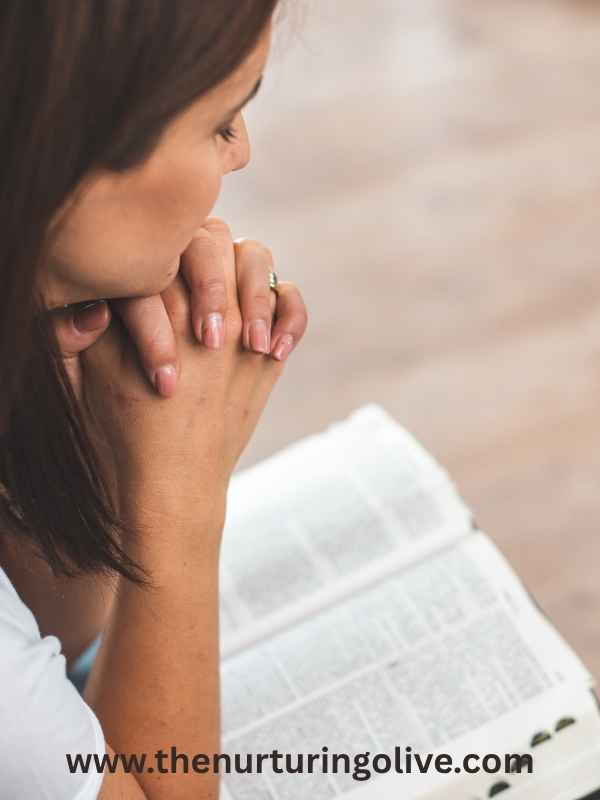
Many Christians want to fast, but no one ever really teaches them how to begin.
So they keep postponing it, unsure where to start or afraid of doing it wrongly.
This complete fasting and prayer guide for beginners will help you understand what fasting means, why it matters, and how to begin with confidence. It will help you take your very first step with confidence and clarity.

A fasting and prayer guide for beginners is one of the most needed resources in the Christian space right now, and honestly, it has been for a long time. Because fasting is one of those spiritual disciplines that most believers know they should probably practise, and yet very few have actually been taught how. It feels intimidating. It feels physical in a way that prayer does not. And if nobody has ever sat down with you and explained what it actually means, why God invites us into it, and how to begin without making it a terrible experience, it is very easy to keep putting it off indefinitely.
That changes today. This guide is written for you if you have never fasted before, if you tried it once and gave up halfway through, or if you have been fasting occasionally but want to understand the spiritual depth behind what you are doing. Whatever your starting point, you are welcome here. Fasting is not a discipline reserved for the super spiritual. It is an invitation extended to every believer who is hungry for more of God than ordinary days seem to offer.
So let us walk through this fasting and prayer guide for beginners step by step. No guilt. No impossible standards. Just honest, biblical, practical truth about one of the most powerful spiritual practices available to every child of God.
My First Fast and What It Taught Me About Hunger

The first time I attempted a proper fast, I lasted about four hours. And then I ate something because I convinced myself it was a medical necessity. It was not. And I have earlier made a delicious food that my whole body was craving to eat. I couldn’t continue the fast because of the irresistible aroma of the food.
What I discovered in that humbling experience was that the physical hunger was not actually the hardest part. The hardest part was what the hunger exposed: how much of my sense of comfort, control, and daily routine was tied up in food. Removing it for even a few hours made me restless in a way that had nothing to do with my stomach. It had everything to do with my soul. And that, I later understood, is precisely the point.
Fasting does not just remove food. It removes a layer of comfort that can sometimes muffle God’s voice in our lives. When that layer is lifted, even temporarily, something becomes clearer. The prayer feels more urgent. The Scripture feels more alive. The sense of God’s nearness becomes more tangible. I did not understand any of that on my first failed attempt. However, the more I persisted and grew into the practice, the more I understood why Jesus did not say “if you fast.” He said “when you fast” (Matthew 6:17). He fully expected it to be part of a believer’s life.
What Is Fasting and What Does the Bible Say About It?
Before anything else in this fasting and prayer guide for beginners, we need to establish what fasting actually is. Because there is a lot of confusion around it, and confusion breeds either fear or misuse.
At its simplest, biblical fasting is the voluntary act of abstaining from food, and sometimes other things, for a specific spiritual purpose. It is not a hunger strike. It is not a diet. And, it is not a way of twisting God’s arm or earning His favour. Rather, fasting is an act of deliberate surrender. It is the physical expression of a spiritual posture that says: God, I want You more than I want this. I am setting aside a legitimate physical need to make space for something eternal.
Throughout Scripture, fasting appears in the most significant moments of spiritual history. Moses fasted for forty days before receiving the Ten Commandments (Exodus 34:28). Esther called the Jewish people to fast for three days before she approached the king, knowing her life was at risk (Esther 4:16). Daniel fasted and received prophetic revelation that changed the trajectory of a nation (Daniel 9:3). Jesus fasted for forty days before beginning His public ministry (Matthew 4:2). Furthermore, the early church fasted together before sending out missionaries and appointing leaders (Acts 13:2-3, Acts 14:23). Fasting, in every one of these cases, preceded breakthrough, clarity, and the unmistakable movement of God.
Why Do Christians Fast? The Real Purpose Behind the Practice
One of the most important things any fasting and prayer guide for beginners can do is answer the why before it addresses the how. Because if you do not understand why you are fasting, you will struggle to sustain it when it gets uncomfortable. And it will get uncomfortable.
Fasting Deepens Your Prayer Life
Prayer and fasting are not separate disciplines that happen to share a name. They are deeply intertwined. When you fast, your prayers become more focused and more urgent. The time you would have spent eating becomes time spent seeking God. The hunger pangs become natural reminders to pray. In this way, fasting turns the ordinary rhythms of your day into a sustained conversation with God. If you want to understand more about how to pray effectively alongside your fast, the post on How to Pray Effectively as a Beginner walks you through what prayer can look like at every stage of your spiritual journey, and it pairs beautifully with what you will learn here.
Fasting Humbles the Soul Before God
Psalm 35:13 says: “I humbled myself with fasting.” There is something about physical deprivation that strips away the layers of self-sufficiency we build up without even noticing. When you fast, you are reminded at a visceral level that you are a creature who is utterly dependent on God for every breath, every heartbeat, and every meal. That reminder is good for the soul. It repositions you before God. It reminds you who He is and who you are in relation to Him, and from that realigned posture, prayer becomes more genuine and faith becomes more alive.
Fasting Sharpens Your Spiritual Sensitivity
Many believers report that their ability to hear God’s voice is significantly clearer during a fast. This is not coincidence. When we remove the noise and comfort of food, the other layers of distraction also seem to thin. The Spirit speaks more clearly. The Word lands more deeply. Impressions and promptings that might otherwise be drowned out in the business of normal life become more audible. Fasting essentially turns down the volume on the world so that God’s voice can be heard more distinctly.
Fasting Positions You for Breakthrough
In Matthew 17:21, Jesus told His disciples that some things only come out through prayer and fasting. There are situations in life, stubborn patterns, long-standing prayers, spiritual battles, that require this kind of heightened spiritual engagement. Fasting is not magic. It does not force God to act. However, it does position you before Him with an intensity and a sincerity that invites His intervention in ways that ordinary prayer seasons sometimes do not. Therefore, when you are facing something that feels immovable, fasting and prayer together are among the most powerful responses available to you.
Types of Fasting: Which One Is Right for You as a Beginner?
One of the most practical sections of any fasting and prayer guide for beginners is the breakdown of different types of fasts. Not every fast looks the same, and Scripture gives us examples of several different approaches. Knowing your options removes the all-or-nothing pressure that stops many beginners before they even start.
The Complete Fast (Normal Fast)
This is abstaining from all food while continuing to drink water. It is the most common form of fasting in Scripture and what most people picture when they hear the word fast. Jesus fasted this way for forty days (Matthew 4:2). For beginners, a complete fast of twelve to twenty-four hours is a completely appropriate and meaningful starting point. There is no need to begin with multiple days. Start with what you can sustain with integrity.
The Daniel Fast

Named after Daniel’s practice in Daniel 1 and Daniel 10, this is a partial fast that restricts the diet to fruits, vegetables, whole grains, nuts, seeds, and water, while abstaining from meat, dairy, sugar, processed foods, and caffeine. It is one of the most widely practised fasts in the Christian community and is particularly accessible for those who cannot do a complete food fast for medical or physical reasons. The Daniel Fast is also highly recommended for extended periods of fasting, such as seven, twenty-one, or forty days.
The Partial Fast
This involves fasting from specific meals or specific types of food rather than all food. For example, fasting from breakfast and lunch daily and eating one simple meal in the evening. It can also involve fasting from a specific item, like sugar, social media, television, or caffeine, for a defined period. While these are less traditional, they are legitimate spiritual disciplines when practised with a genuine heart of surrender and replaced with intentional prayer and Scripture.
The Absolute Fast
This involves abstaining from both food and water. Esther declared this kind of fast for three days (Esther 4:16). Paul also abstained from food and water for three days after his encounter with Jesus on the road to Damascus (Acts 9:9). This is a short-term, intensely spiritual fast and should never extend beyond three days without medical supervision. It is not recommended for beginners and should only be undertaken when you genuinely sense God’s leading and have prepared your body accordingly.
How to Start Fasting and Praying: A Step-by-Step Guide for Beginners
Now that we have covered the foundation, let us get into the practical steps. This is the core of the fasting and prayer guide for beginners, and it is written to be honest and doable rather than overwhelming.
Step 1: Establish Your Purpose Before You Begin
Every biblical fast had a specific purpose. Moses sought God’s presence. Esther sought deliverance. Daniel sought understanding. Before you fast a single hour, sit quietly before God and ask: why am I doing this? What am I seeking? What do I want God to do, reveal, or change? Write it down. Having a clear purpose gives your fast direction and helps you stay focused when the physical discomfort starts to compete with your resolve. Without a purpose, fasting is simply not eating. With one, it becomes a sacred, intentional act of spiritual pursuit.
Step 2: Choose Your Type and Duration
As a beginner, start with what is honest and sustainable. A twelve-hour fast from dinner one evening to noon the following day is a completely valid and spiritually meaningful beginning. Once you have completed that with integrity, you can extend to twenty-four hours. In time and as God leads, you can grow from there. Choose the type of fast that works with your health, your season of life, and the leading of the Holy Spirit. If you have a medical condition, please consult your doctor before fasting from food. God is not honoured by you harming your body in His name.
Step 3: Prepare Your Body and Your Home
Practical preparation makes a significant difference, especially for longer fasts. In the days before your fast, begin reducing caffeine gradually to avoid withdrawal headaches. Increase your water intake. Eat lighter, simpler meals rather than loading up the day before. If you share a home with others, consider letting them know you will be fasting so that meal preparation and food conversations during that period are not a constant source of temptation. Small, intentional preparations honour the seriousness of what you are undertaking and set you up for success.
Step 4: Structure Your Prayer Time During the Fast
Fasting without prayer is simply not eating. The two must work together. Before your fast begins, plan specifically how you will use the time you would normally spend on food. Use those windows for prayer, Scripture reading, journaling, or worship. Let every hunger pang serve as a gentle reminder to turn your heart toward God. One of the most powerful habits you can build during a fast is beginning the day in prayer before anything else. If you want a framework for morning prayer that you can use specifically during your fasting period, the post on Morning Prayers to Start Your Day With God gives you actual prayers to open each day, including prayers of surrender and consecration that are perfect for a fasting season.
Morning Prayers to Start Your Day With God: Powerful Prayers for Peace, Strength, and Direction
Step 5: Close Each Fasting Day in Prayer
Just as you open the day in prayer, close it the same way. Ending your fast day with intentional night prayer anchors everything you experienced spiritually that day and releases the next day into God’s hands before you sleep. Night is particularly important during a fast because the body is often weakest at the end of the day and the temptation to break the fast prematurely can be strongest. The post on Night Prayers for Protection and Peaceful Sleep has a collection of closing prayers, including ones specifically for surrender and trust, that work beautifully as an evening bookend to a day of fasting and prayer.
Night Prayers for Protection and Peaceful Sleep: Powerful Prayers to End Your Day With God
Step 6: Break Your Fast Gently and Thoughtfully
How you end a fast matters. After a short fast of twelve to twenty-four hours, you can generally return to normal eating without special precautions, though starting with something simple and light is wise. After a longer fast, breaking it gradually is essential. Begin with diluted juice or broth, then move to soft fruits and vegetables, then to normal foods over a day or two. Returning too quickly to heavy food after an extended fast can cause real physical discomfort. Furthermore, take a moment when you break the fast to pray one final prayer of gratitude. Thank God for meeting you in that time. Record anything He showed you. The insights that come during fasting often carry the most lasting fruit.
What to Do With Your Time While Fasting and Praying
One thing that surprises many beginners is how much time opens up when you remove meals from the day. Preparing food, eating, and cleaning up can account for two to three hours daily. During a fast, that time becomes sacred space. Here is how to fill it intentionally:
- Pray specifically for your stated purpose. Return to it every time you pray during the fast. Be specific. Be honest. Be persistent.
- Read the Scriptures slowly and meditatively. Fasting heightens your receptivity to the Word. Let it speak rather than rushing through a reading plan.
- Journal your thoughts, prayers, and any impressions from God. Writing during a fast captures insights that can easily disappear once normal life resumes.
- Play music that ushers you into God’s presence. Sing if you feel led. Fasting and worship together create an atmosphere where God moves.
- Intercede for others. A fast is a powerful time to carry other people before God in sustained, specific prayer. Think of the people and situations weighing on your heart and pray through them intentionally.
If you would like structured guidance on what to pray during your fasting season, the article 30 Powerful Prayer Points for Daily Spiritual Growthprovides focused prayer direction you can use throughout your fast.
30 Powerful Prayer Points for Daily Spiritual Growth (With Scriptures)
Above all, avoid filling the empty time with television, social media, or entertainment. That would largely defeat the purpose. Fasting is designed to create a holy vacancy. Let God fill it.
Common Mistakes Beginners Make When Starting to Fast and Pray
Knowing what to avoid is just as important as knowing what to do. Here are the most common pitfalls in a fasting and prayer guide for beginners and how to sidestep each one:
Starting Too Big
Committing to a seven-day fast the first time you ever fast is almost certainly a setup for failure and guilt. Start with twelve to twenty-four hours. Build from there as God leads and as your body and spirit grow into the practice. There is no spiritual prize for attempting more than you can sustain with sincerity.
Fasting Without Praying
This is the most significant error a beginner can make. Skipping food without replacing that time with intentional prayer is not a spiritual fast. It is a diet with religious intentions. Every hour of fasting should be accompanied by a corresponding increase in prayer. If you are not sure what to pray or how to fill extended prayer time, the post on How to Pray Effectively as a Beginner gives you a complete, practical framework for meaningful prayer that you can carry into your fast.
Making It About Performance
Jesus specifically addressed this in Matthew 6:16-18. He warned against fasting in a way that is visible to others, designed to impress rather than to seek God. Fasting is a private act between you and your Father. Telling people you are fasting in a way that seeks their admiration drains the fast of its spiritual power. Keep it between you and God. Let Him be the audience.
Giving Up After Breaking the Fast Too Early
If you break your fast earlier than planned, do not give up on the discipline entirely. Simply acknowledge it, bring it honestly to God, and try again. The spiritual muscle of fasting is built gradually, exactly like any other muscle. The believers who fast consistently and powerfully today are people who also stumbled and started over more than once. Faithfulness over time matters far more than a single perfect performance.
What the Bible Promises About Fasting and Prayer
No fasting and prayer guide for beginners is complete without addressing what God actually promises to those who fast. Because this discipline is not a spiritual guessing game. It is rooted in the specific character and promises of God.
Isaiah 58 is perhaps the most detailed passage in Scripture about what genuine fasting produces. Verses 6 through 8 describe the fast God has chosen: loosening chains of injustice, freeing the oppressed, sharing food with the hungry. And then it says: “Then your light will break forth like the dawn, and your healing will quickly appear; then your righteousness will go before you, and the glory of the Lord will be your rear guard.” Light. Healing. Righteousness. The presence of God surrounding you. These are not vague spiritual feelings. These are specific, named outcomes of a life of genuine fasting and prayer.
Furthermore, Matthew 6:18 carries a quiet but significant promise from Jesus: “Your Father, who sees what is done in secret, will reward you.” God sees the private, unglamorous act of fasting done for His glory alone. And He rewards it. That reward may look different for each believer and each season. However, the principle is clear: what is done in secret for God does not go unnoticed by God. He honours it.
FAQs: Fasting and Prayer Guide for Beginners
How long should a beginner fast for the first time?
The most important principle in any fasting and prayer guide for beginners is to start small. Twelve to twenty-four hours is a completely valid and spiritually meaningful first fast. It is long enough to feel the spiritual depth of the practice without overwhelming your body. Once you have completed that with honesty and intentionality, you can gradually extend your fasting as God leads.
What can I drink during a fast?
During a complete or normal fast, water is the standard. Drinking plenty of water throughout the day is essential, especially during longer fasts. During a Daniel Fast, herbal teas and natural juices without added sugar are generally acceptable. Some people also include black coffee in shorter fasts, though many prefer to remove caffeine entirely to avoid withdrawal symptoms. During an absolute fast, nothing is consumed. As always, if you have a health condition, please seek medical guidance before restricting fluids.
Can I fast if I have a medical condition?
If you have diabetes, a history of disordered eating, heart conditions, or any other serious medical issue, please consult your doctor before beginning any food-based fast. God does not require you to harm your body to draw near to Him. There are always alternatives, including a Daniel Fast, a non-food fast from social media or entertainment, or a prayer-only fast that does not restrict eating. The heart behind the practice matters far more to God than the specific form it takes.
What do I do when hunger makes it hard to focus on prayer?
Use the hunger. That is actually the most powerful thing you can do. Every time your stomach reminds you that you have not eaten, let that physical sensation immediately become a prompt to pray. Redirect your attention to God in that moment. Over time, you will find that the hunger and the prayer become naturally linked, so that the physical sensation no longer pulls you away from God but drives you toward Him. This is one of the most beautiful and counterintuitive aspects of fasting.
How is fasting different from just skipping a meal?
As this fasting and prayer guide for beginners has established throughout: fasting is defined by its purpose and its replacement, not merely its absence of food. Skipping a meal because you are busy is not a fast. Fasting is the intentional setting aside of food, accompanied by intentional prayer, for a specific spiritual purpose. The spiritual dimension is what transforms a physical act into a sacred one. Without prayer, you are simply not eating. With prayer, you are entering one of the most ancient and powerful spiritual practices in the Christian tradition.
How often should I fast once I start?
There is no universal prescription. Some believers fast one day a week as a consistent spiritual rhythm. Others fast in response to specific seasons, needs, or God’s prompting. Still others participate in longer corporate fasts during significant times of the year. Begin by asking God how He wants to build this discipline into your life. Start with one intentional fast and let your practice grow organically from there. Consistency over time matters more than frequency in any particular week or month.
Prayer for Strength During Difficult Times: Powerful Prayers to Carry You Through Every Hard Season
A Prayer to Begin Your First Fast
Before you begin, here is a simple prayer you can pray to consecrate your fast to God:
Father, I come before You today to consecrate this fast to You. I am not doing this to be seen or to impress anyone. Lord, I am doing this because I want more of You than comfort has been giving me. I am setting aside food and the ordinary rhythms of this day to make deliberate space for Your voice, Your presence, and Your work in my life. I ask You to meet me in this fast. Speak to me through Your Word. Reveal what You want me to see. Do what only You can do in response to this act of surrender. I trust You. I am hungry for You more than for anything else. In Jesus’ name, amen.
Final Thoughts on This Fasting and Prayer Guide for Beginners

The most important thing to take from this fasting and prayer guide for beginners is this: start. Not perfectly. And not with a forty-day commitment. Not with a complex plan. Simply start. Choose a day, choose a purpose, choose to give God your hunger instead of satisfying it, and see what He does.
Fasting and prayer for beginners is not about arriving at an advanced spiritual level. It is about taking the next honest step toward God. And God, who sees what is done in secret, rewards it. He has always been faithful to those who seek Him with sincerity, even when that seeking is imperfect, even when it is messy, even when it starts with a twelve-hour fast and a stomach that will not stop complaining. He meets you there.
So begin. Come hungry. And trust that the God who fed five thousand people with five loaves and two fish is more than able to meet the spiritual hunger you bring to Him in a fast.
Let’s Hear From You!
Have you ever tried fasting and prayer before? What was your experience? Or is this fasting and prayer guide for beginners your very first introduction to the practice? Either way, I would love to hear from you in the comments below. Share where you are, ask any questions you still have, and let this community of faith encourage you forward. If this post helped you, please share it with someone else who is ready to go deeper with God. And use the hashtags #nurturingolive and #lorettaginikachimemoh so we can keep encouraging one another in faith.
You might also enjoy:
- Morning Prayers to Start Your Day With God
- 30 Powerful Prayer Points for Daily Spiritual Growth
- How to Pray Effectively as a Beginner: A Christian Guide
- Teaching Kids How to Pray: A Gentle, Real-Life Guide for Parents
- Night Prayers for Protection and Peaceful Sleep
- How to Build a Strong Prayer Life: A Step-by-Step Guide for Christians Who Are Ready to Go Deeper
- Prayer for Strength During Difficult Times
If you enjoy content like this, we would love to stay connected with you. Follow us on Facebook for our daily posts on parenting, faith, family life, and nutritious food ideas that help families live healthier and happier lives.
Facebook: The Nurturing Olive

