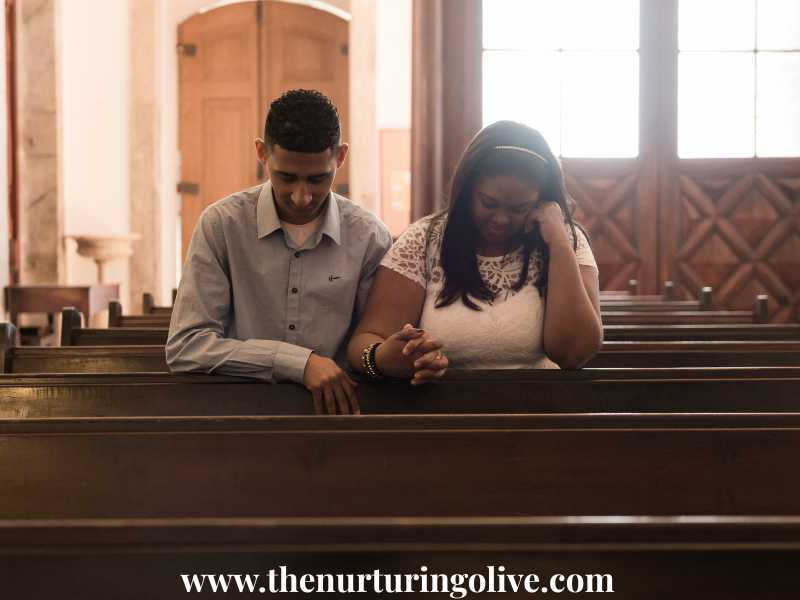

Forgiveness and healing in marriage: a godly perspective. These words sound beautiful, but living them out can feel like carrying a cross.
Let’s be honest: no marriage is a fairy tale. Behind every smiling couple’s photo are stories of tears, misunderstandings, and moments they didn’t know if love would survive. Sometimes, it’s not big betrayals that break us, but the small daily cuts like harsh words, forgotten gestures, silent treatments, or unmet expectations.
I’ve met couples who sleep on the same bed but live in two separate worlds emotionally. They attend church together, yet their hearts are miles apart. And when you ask what happened, it all comes down to one thing – unforgiveness.
Forgiveness doesn’t always feel fair, but it’s the only way to free the heart and heal the home. That’s why today, we’re going to walk through what forgiveness and healing in marriage really mean from God’s perspective, not the world’s. Because when God is invited into a broken marriage, He doesn’t just mend; He makes new.
When Forgiveness Unlocks Healing

I remember an unforgettable moment during a healing program organized by my local church some time ago. On the second day of the event, during a prayer session, a woman standing beside me suddenly burst into tears. Her voice trembled as she cried out,
“Lord, I forgive him. Even though I still hurt, I forgive my husband. Father, please release me from this chain of unforgiveness and heal me. Heal my marriage.”
The room grew silent. Everyone turned toward her, shocked and unsure how to react. Her husband, who was also standing close by, looked visibly embarrassed. Yet, the woman seemed unaware of her surroundings. Her pain was raw, her voice sincere, and her words pierced the atmosphere like arrows of truth.
Later, as the Spirit of God moved in that gathering, her husband confessed that he had once cheated on her. Many of us were stunned. This was a couple we all admired. They were faithful workers in the church, often seen wearing matching outfits, smiling side by side. To the outside world, they looked like the perfect example of a godly home. But behind those smiles was a wound time had not yet healed.
Choosing to Let Go
The husband explained that he had apologized several times, but his wife could not bring herself to forgive him. The betrayal had cut too deep. Though they still lived under the same roof, they had become mere flatmates – sharing space but not hearts. They smiled in public but suffered in silence.
That day, something shifted. As the woman poured out her pain before God, her husband, broken and repentant, knelt beside her, pleading again for forgiveness. Tears flowed freely as he confessed and vowed to change. It was a holy moment – one that only God could orchestrate.
Moved by the Spirit, the woman forgave him, right there on the spot. She released the weight she had carried for so long. And from that moment, God began to restore their home.
Weeks later, they returned to church with radiant smiles, hand in hand, testifying of God’s healing power. Their marriage, once cold and silent, had found new warmth and joy.
The Power of Forgiveness in Marriage
That testimony reminded everyone that forgiveness and healing in marriage are not just godly virtues. They are lifelines. When we choose to forgive, we open the door for God to mend what our human strength cannot fix. Forgiveness doesn’t erase the past, but it gives room for grace to rewrite the future.
No matter how broken things may seem, there is nothing too hard for God to heal. The moment we release the pain, He begins His work of restoration. And just like that woman, when we surrender our hurts to God, we make way for peace, joy, and divine renewal in our marriages.
When Pain Turns into Poison

Every marriage has moments of hurt. Sometimes it’s disappointment; other times, it’s betrayal. But pain left untreated turns into bitterness, and bitterness can choke love to death.
It starts small like a cold response here, an ignored message there. Before long, both partners stop talking freely. Resentment replaces affection. What used to be laughter becomes arguments.
Unforgiveness is like holding a burning coal and expecting your spouse to feel the pain. You carry the wound everywhere, but it’s you who keeps bleeding.
God never said marriage would be easy, but He said love “keeps no record of wrongs” (1 Corinthians 13:5). That doesn’t mean pretending nothing happened; it means choosing freedom over bondage, grace over grudges.
When Love Meets Imperfection
Every marriage joins two imperfect people – both carrying scars, habits, histories, and sometimes unspoken fears. There will be disappointments. There will be moments one person speaks carelessly, forgets, or fails.
But forgiveness is not about pretending those things never happened. It’s about choosing to let go of the need to punish. It’s saying, “I release you, because I refuse to let bitterness build a home in my heart.”
The power of forgiveness doesn’t deny pain, it invites healing through it.
The Power of God’s Kind of Forgiveness
When talking about Forgiveness and healing in marriage, let’s remember that forgiveness in marriage is not denial. It simply a divine decision.
It’s looking at the person who hurt you and saying, “You don’t owe me anymore because I’ve handed your offense over to God.”
It takes strength to forgive, but it takes God to heal.
When we forgive, we make room for God to move. Healing may not be instant, but it begins when forgiveness takes root. Sometimes, the process starts with prayer even before the other person apologizes.
Remember what Jesus said in Matthew 6:14-15 “if we forgive others, God forgives us; if we don’t, we block His forgiveness”. Unforgiveness builds a spiritual wall that even prayers can’t pass through.
So when you release your spouse, you don’t just save your marriage; you save your soul from bitterness.
Real Forgiveness Looks Like This
Forgiveness doesn’t mean forgetting; it means releasing.
It’s not pretending the wound didn’t happen, but refusing to let it control your future.
Here’s what real forgiveness in marriage looks like:
- You stop rehearsing the offense. You no longer use it as a weapon in every disagreement.
- You allow your spouse to rebuild trust. Healing takes time, but you open the door to start again.
- You choose peace even when pride wants to win.
- You talk to God more than you talk about your spouse.
Forgiveness is not weakness. It is strength covered in humility.
Forgiveness Doesn’t Mean Losing Yourself

Many believers confuse forgiveness with tolerance. But godly forgiveness does not mean staying in harm’s way or suppressing your emotions.
True forgiveness involves wisdom and boundaries.
It’s okay to say, “I forgive you, but we need help.”
>It’s okay to pause and heal under godly counsel or mentorship.
>It’s okay to create space for growth without losing your voice.
Forgiveness never meant silencing your pain. Instead, it meant releasing it into God’s hands while allowing Him to restore your peace.
Boundaries protect the healing process; they don’t block forgiveness.
Healing Takes Time – and That’s Okay
Forgiveness isn’t always a one-day decision. Sometimes, you’ll think you’ve moved on until something triggers the memory again. That doesn’t mean you’ve failed; it means you’re human.
Healing in marriage comes in layers. Some days it feels lighter; other days the weight returns. But every time you choose to forgive again, you’re pulling another root of bitterness out of your soil.
Even in that process, celebrate the small wins. Small wins like the first time you prayed together again, the day you laughed genuinely, the night you slept peacefully without resentment. These are signs that healing is happening quietly in the background.
When the Other Person Isn’t Sorry
Now, this is one of the hardest parts – what happens when your spouse doesn’t apologize, doesn’t seem to care, or refuses to change?
Forgiving doesn’t mean excusing sin or ignoring accountability. You can forgive someone and still hold them responsible for their actions. You can forgive and still walk in wisdom, allowing God to handle what your heart cannot.
Sometimes, God heals marriages through reconciliation. Other times, He heals you first – before He works on the other person. Either way, your peace must remain rooted in Christ, not in their response.
Choosing to Walk Together Again

When forgiveness begins to take root, healing starts to bloom. Couples who walk this road with humility, patience, and prayer often find themselves more connected than before. Because they didn’t just survive the pain. They also grew through it.
If both partners invite God back into the process, prayer becomes sweeter, words become gentler, and hearts begin to see each other differently again. That’s when the Spirit of God knits what was torn, making it stronger than before.
Healing Together – Not Separately
Forgiveness starts with one person, but healing happens with two.
You can’t build a healthy home when one partner is bleeding inside. Healing requires honesty, time, and spiritual rebuilding.
One of the best things a couple can do after a season of hurt is to pray together again. Prayer has a way of melting hearts. When you pray together, it’s hard to stay enemies.
If both partners allow God to step in, healing flows like living water – slow but sure. It may take days, months, or even years, but the Holy Spirit has a way of restoring joy where pain once lived.
That’s what forgiveness and healing in marriage: a godly perspective truly means. It’s inviting God to take His rightful place in your story.
When Trust Has Been Broken

Rebuilding trust is one of the hardest parts of marital healing. You can forgive your spouse and still struggle to trust them again. That’s okay. It’s part of the process.
Trust is rebuilt through consistency. When actions start matching words, healing becomes visible.
Don’t rush it. Don’t fake it. Let trust grow naturally again.
If you are the one who broke trust, take responsibility. Apologize sincerely. Be patient with the healing journey.
If you are the one hurt, keep your heart open to God. Let Him show you when to rebuild and how.
Healing doesn’t mean going back to how things were but becoming something stronger than before.
How to Start the Journey Toward Forgiveness and Healing
Here are some godly steps that can help you begin:
- Acknowledge the pain. Don’t bury it; bring it before God.
- Pray for your spouse – especially when you don’t feel like it.
- Seek wise counsel. A godly counselor or pastor can help rebuild broken foundations.
- Choose grace daily. You may need to forgive the same hurt more than once.
- Speak life, not death. Watch your words. Healing starts with what you say.
- Remember the bigger picture. Marriage is a covenant, not a contract.
When Forgiveness Feels Impossible
Maybe your story is painful. Maybe your heart says, “I can’t do this anymore.”
But remember this; forgiveness is not for perfect people; it’s for those who want peace.
When Jesus was on the cross, He forgave people who didn’t even ask for it. He gave us the perfect example of what love looks like under pressure.
If Christ could forgive from the cross, you can forgive in your marriage, though not by your power, but by His grace.
Frequently Asked Questions on Forgiveness and Healing in Marriage

1. Does forgiving my spouse mean I have to forget what happened?
Not necessarily. Forgiveness doesn’t erase your memory. Forgiveness simply transforms how you remember. You may never forget the event, but with time, the pain attached to it fades. True forgiveness allows you to recall the event without bitterness or anger. It’s not “forgive and forget,” it’s “forgive and let God heal what hurts.”
2. What if my spouse keeps repeating the same offense?
That’s one of the toughest situations in marriage. Forgiveness doesn’t mean tolerating ongoing harm. If your spouse continues the same behavior, it’s time for accountability and possibly counseling. Boundaries are part of godly love. Even Jesus forgave, yet He confronted wrongdoing with truth and firmness.
3. How long should healing take after betrayal or hurt?
There’s no set timeline. Healing is a journey, not a stopwatch event. Some wounds close in weeks; others take months or even years. The key is consistency – praying together, communicating openly, and allowing the Holy Spirit to soften hearts. Healing deepens as both partners commit to the process, not just the apology.
4. Can a broken marriage truly be restored after infidelity?
Yes, it can, but only when both partners are willing to rebuild trust under God’s guidance. Infidelity breaks the foundation of trust, but repentance, counseling, and divine grace can rebuild what was lost. Countless marriages have come back stronger because they let God rewrite their story.
5. What if I’m the one who caused the hurt? How do I help my spouse heal?
Start by being honest. Don’t rush their healing. Take responsibility, apologize sincerely, and show consistency in your change. Healing grows when the offender becomes a safe place for the wounded heart. Pray for them, not to defend yourself, but to intercede for their peace and restoration.
6. How do I forgive when I still feel angry?
Forgiveness is a decision before it’s an emotion. It begins as obedience to God’s Word and later matures into peace. Start by telling God honestly how you feel. Ask Him to help you want to forgive. Over time, your emotions will follow your obedience, and peace will replace the anger.
7. Is it possible to heal while separated or divorced?
Yes. Healing is not tied to proximity. It is tied to surrender. Whether or not reconciliation happens, God still desires to heal you. Many people think healing means coming back together, but sometimes, it simply means finding peace and spiritual wholeness again, even if the relationship doesn’t resume.
8. How can couples maintain forgiveness and peace daily?
Make forgiveness a lifestyle, not an event. Pray together regularly. Keep short accounts of offense. Don’t let offenses pile up. Speak kindly even during disagreements. Above all, keep Christ at the center of your home. When God is the anchor, even storms can’t break your bond.
Final Thoughts on Forgiveness and Healing in Marriage

Marriage is not just a union of two hearts. It’s a divine covenant that demands grace daily. Every misunderstanding, every tear, and every silence becomes an opportunity to practice godly love.
Forgiveness and healing in marriage don’t happen overnight. They happen through small daily choices like choosing prayer over pride, love over ego, grace over retaliation. There will be days it feels one-sided. There will be moments your heart whispers, “I can’t do this anymore.” But in those moments, remember this; God never called you to do it alone.
When Christ becomes your center, He becomes your healer. The same hands that healed the broken-hearted still mend broken marriages today. Forgiveness does not make you weak instead it makes you more like Jesus. And healing does not mean you’ll never feel pain again – it means pain no longer defines you.
So take a deep breath today.
Lay your hurts before God.
Whisper your pain in prayer instead of silence.
And let His grace write a new chapter for your home.
Because no matter how torn your story seems right now, God still specializes in bringing beauty out of brokenness.
Let’s Talk About It
I would really love to hear from you.
How are things in your marriage right now? Have you struggled with forgiveness and healing lately? What steps are you taking to invite God into that process?
Drop your thoughts in the comment section. Someone out there might find strength through your story.
If this post blessed you, please react, share, and tag someone who might need to read this today. Don’t just keep it to yourself. Someone’s home might be restored because you shared this truth.
And if you enjoyed this article, you’ll love reading our other posts too:
Let’s keep growing, learning, and building Christ-centered love stories together.
Also, don’t miss our Godly films on YouTube. They are stories that bring faith to life in powerful, relatable ways. They’ll encourage you, inspire you, and help you see God’s hand in everyday moments.
Watch here: Christ Love Crusaders Ministries YouTube Channel

