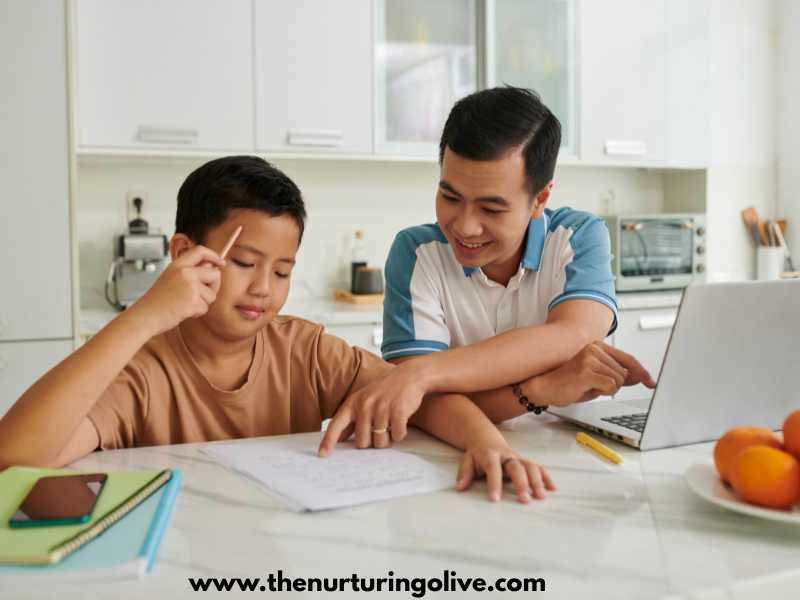
This Homeschooling Guide for Parents explains vividly what homeschooling is. It will guide you to understand the full meaning of homeschooling and how you can smoothly navigate it.
What is Homeschooling? (Definition & Brief History)

Homeschooling is the practice of educating children at home instead of sending them to a traditional public or private school. It’s not new. For most of history, children were taught at home by parents, tutors, or community elders. Modern homeschooling picked up again in the 1970s as families sought more personalized education, and today, millions of children worldwide thrive through it.
Learning Beyond the Classroom

Imagine this: it’s 9:05 p.m., the kitchen light is soft, and your little one who’s supposed to be asleep is giggling over a messy baking soda volcano science project on the countertop. You laugh along, pour vinegar into the cup, and answer a hundred curious questions. In that silly, sticky kitchen moment, you realize: learning doesn’t have to happen in rows of desks between bells. It can happen right here, in small bursts of joy, curiosity, and togetherness.
That’s the heart of homeschooling. It is the freedom to follow a child’s wonder and shape learning around life, not the other way around.
If you’ve been wondering about how to homeschool – whether you’re curious, anxious, or halfway convinced – this guide will walk you through what it really means, why families choose it, and how to start in a simple, doable way.
Why Families Choose Homeschooling

Families step into homeschooling for all sorts of reasons – some practical, some heartfelt, and some born out of frustration with the traditional school system. You may recognize one or two of these:
- A child who isn’t flourishing in a crowded classroom.
- A desire to protect a sensitive child from bullying or anxiety.
- The wish for a schedule that supports sports, arts, or family commitments.
- The need to weave faith, culture, or values into daily learning.
- The hope of following a child’s natural pace and curiosity instead of a rigid curriculum.
Homeschooling isn’t one size fits all. It’s a flexible life choice that looks wildly different from home to home.
Is Homeschooling Legal? (The Rules Made Simple)
The good news: homeschooling is legal in all U.S. states and many other countries.
The catch: requirements vary. Some states require portfolio reviews, attendance records, or occasional testing. Others simply ask you to notify your district.
First Steps to Begin: Homeschooling Guide for Parents

If your child is already in school, the transition starts with a simple withdrawal letter to the principal or superintendent. If they’ve never attended, your first step is just knowing the start age and filing notice (if required).
From there, here’s a practical roadmap for how to start homeschooling:
- Define your “why.” Flexibility, faith, academic support — clarity here will anchor you when doubts creep in.
- Learn your state’s rules.
- Choose a homeschooling style, not a straitjacket.
- Select your homeschool curriculum.
- Keep simple records.
- Find community.
What a Homeschool Day Can Look Like
Here’s the magic: there’s no single “right” homeschool schedule. Families bend it to fit their rhythms.
- The Gentle Rhythm (for littles): Morning songs, a short math lesson, art, storytime, and an afternoon nature walk.
- The Block Schedule (for older kids): Morning core subjects, midday break, and afternoon projects or co-op classes.
- The Interest-Led Week: Pick a theme like “Ancient Egypt” and weave it into reading, cooking, geography, and art.
Choosing a Philosophy: Homeschooling Guide for Parents
Don’t let the terminology overwhelm you. Here’s a quick sampler:
- Montessori: independence and hands-on learning.
- Charlotte Mason: short lessons, literature, and nature study.
- Waldorf: creativity and rhythm.
- Classical: logic, history, and language focus.
- Unschooling: child-led, interest-driven learning.
Curriculum Planning: Practical, Not Perfect

The sheer number of homeschool curriculum options can be paralyzing. Start with essentials:
- Core skills: reading, writing, math.
- Enrichment: science, art, history.
- Life skills: cooking, budgeting, basic household tasks.
Records, Testing, and College Prep
Worried about college? Many homeschoolers are admitted to top universities, even Ivy Leagues.
Socialization, Sports, and Friendship
“Won’t they miss out?” is the number one question. Truth: homeschooled kids are often very social — just differently.
If You Feel Unqualified (A Gentle Truth)
You don’t need to be a professional teacher. You’re a guide, a facilitator.
Quick Homeschooling FAQs
- Are homeschooled kids behind? Most perform at or above average on standardized tests.
- Do they get homework? Usually not in younger years; older students may, depending on their path.
- What if I get sick or overwhelmed? Flexibility allows you to pause, swap days, or lean on online lessons.
- How long can we homeschool? As long as you want – a year, or until graduation.
12 Simple Homeschooling Daily Tips

- Start small. Begin with core hours and a short routine. Expand later.
- Keep a simple planner. A weekly sheet with subjects and goals saves energy.
- Embrace messy experiments. Learning sticks when it’s hands-on.
- Use library resources. Libraries are free treasure chests.
- Trade skills with other parents. Maybe you teach history once a week and someone else teaches Spanish.
- Schedule rest days. Burnout is real. Your family needs slow days.
- Rotate learning spaces. Move outside, to the kitchen, or to a café for variety.
- Celebrate small wins. Mastering multiplication deserves a high five.
- Document, don’t hoard. Keep samples of work and a yearly portfolio.
- Outsource when needed. Tutors, community classes, and online programs are your friends.
- Teach life skills early. Cooking, laundry, and money basics are essential lessons.
- Protect your marriage and your self-care. The best gift to your children is a rested, peaceful parent.
Final Encouragement

Homeschooling isn’t about being perfect; it’s about being present. It is to notice curiosity and respond, to allow mistakes, and to choose steadiness over perfection.
If you want to homeschool because you want your child to feel safe, seen, and known, then you already have the most important qualification.
If you’re still thinking about it, try a week. Keep it small: a morning of reading, a math game, a walk, and a shared dinner conversation about what you discovered. See how it feels. Invite curiosity, and let your family’s rhythm emerge.
Want help making a simple plan for your first month? If you’d like, I can draft a gentle four-week plan tailored to your child’s age, strengths, and the number of hours you can commit each day. Tell me the child’s age and one or two things they love (or struggle with) and I’ll give you a warm, practical month to start – no fluff, just doable steps.
Join the Conversation
Before you go, I’d love to hear from you: what’s the one thing that excites you ( or scares you ) most about homeschooling? Drop it in the comments and let’s tackle it together.
If this homeschooling guide for parents helped you, please share it with a friend or in your parent group. You never know who might need the encouragement right now.
And don’t stop here — we’ve got more articles to inspire and guide you. Check out:
- The Pros and Cons of Homeschooling: Advantages & Challenges
- How to nurture a child for long term success
- Raising Godly Children in Today’s World: A Biblical Parenting Guide
- Parenting in the Digital Age: Raising Safe and Confident Kids
- 12 Christian Parenting Mistakes And How to Turn Them Around
Together, let’s keep learning, sharing, and supporting one another.
Also, don’t miss our Godly films on YouTube—stories that bring faith to life in powerful, relatable ways. They’ll encourage you, inspire you, and help you see God’s hand in everyday moments.
Watch here: Christ Love Crusaders Ministries YouTube Channel

