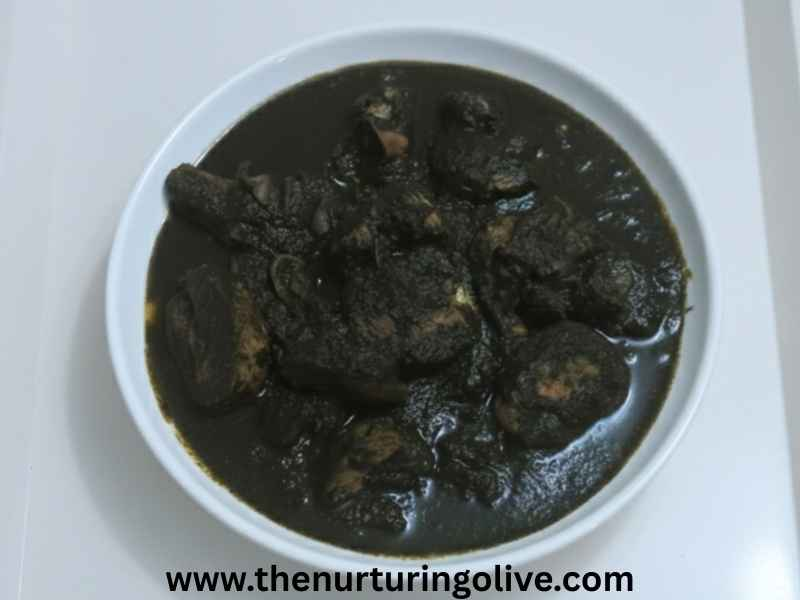
Black soup is one of those Nigerian dishes that many people have heard about, but only a few have truly tasted. It’s not as famous as egusi or ogbono, and because of its dark colour, some people don’t even give it a chance. But behind that colour is a delicious, deeply nourishing, soul-satisfying soup that deserves far more hype than it gets.
Black soup originated from the Edo people – yes, it is their special pride. Anyone who truly knows Nigerian food will tell you that black soup “belongs” to Edo State. It is a traditional treasure, cooked mainly with blended vegetables, native spices, and simple ingredients that fill the body with goodness.
I first encountered black soup during a visit to Edo State a few years ago. Before that day, I had never seen it, tasted it, or even heard about it. The first meal my host offered me was starch and black soup. In Nigeria, when someone truly appreciates your visit, they welcome you with a gift from the land, either as food when you arrive or something you take home. My father always says: “Orji ruo ụlọ, okoo ebe osi,” meaning “When a gift reaches home, it will tell where it came from.”
So when my host presented the soup before me, I froze a little. The colour was quite different from anything I was used to, and I am naturally someone who looks at the appearance of food before eating. But because I value people, hospitality, and culture, I didn’t want to make her feel bad. I decided to taste it quietly praying in my heart that it would at least be manageable.
To be honest… the first spoon shocked me.
Not in a bad way but in a beautiful, unexpected way. The soup was incredibly delicious. Natural. Fresh. Peaceful. Homely. No strange taste, no artificial flavour, just pure, earthy goodness. I didn’t even realise when I finished the entire swallow she served me. My host was so pleased, even offering more, but I was already filled up.
It wasn’t until later, during our conversation, that I gently asked what the soup was made of. She proudly told me it was cooked mainly with vegetables-three kinds, in fact: uziza leaf, scent leaf, and bitter leaf. These are vegetables I see around me all the time. Immediately, something clicked in my mind. I knew this was a soup my family needed.
When I returned home and prepared it for my husband and children, their first reaction was exactly like mine -surprise at the colour. But once I explained how healthy and natural it was, and they tasted it… the plate cleared in minutes.
That was the day black soup became part of our family meals.
So if you’re like me, always searching for healthy, delicious soups to nourish your family, please add black soup to your menu. It is simple, rich, deeply satisfying, and genuinely good for both adults and children. Your family will thank you for it.
Now, let me show you how to prepare this wonderful soup in your own kitchen using simple ingredients.
Related Reading: Palm oil jollof rice and beans

Why You Will Love This Healthy Black Soup

Black soup may look simple, but once you taste it, you will understand why many people quietly treasure it. This is one of those meals that proves that healthy food can also be deeply satisfying. Here are a few reasons why this soup will easily become one of your favourites at home:
It Is Packed With Pure, Natural Goodness
Black soup is made mainly from leafy vegetables – bitter leaf, scent leaf, and uziza leaves. Nothing complicated, nothing artificial. Just vegetables blended smoothly to give you a rich, earthy, homely taste your body will thank you for.
A Nutrient Powerhouse for the Whole Family
Because it is vegetable-based, this soup is loaded with iron, fibre, vitamins, antioxidants, and immune-boosting benefits. It is one of the best soups to include in your family’s menu, especially if you want healthier meals that still taste great.
Black Soup has a Comforting, Native Taste
The flavour of black soup is unique. It feels like something your grandmother would cook. It’s deep, warm, and healing. It carries that traditional Nigerian richness that reminds you of home.
Perfect for Any Swallow
Whether you prefer eba, amala, pounded yam, starch, fufu, or semo, black soup blends beautifully with all. It holds its own without overpowering the swallow and leaves you satisfied but light.
Easy to Digest
Because the vegetables are blended, the soup sits gently in the stomach. Even children and elderly people enjoy it without discomfort.
Very Easy to Prepare
You don’t need plenty ingredients or stressful steps. Once the vegetables are blended, the cooking becomes very easy and straightforward even beginners can make it perfectly.
Flexible and Budget-Friendly
You can cook it with any protein you have like beef, fish, goat meat, or even just stockfish and dry fish. It still comes out delicious. It is one of those soups that deliver a premium taste without demanding a premium budget.
Related Reading: Slow-Cooker Lean Beef Chili with Beans and Sweet Potatoes
Ingredients You Will Need for This Black Soup Recipe

The ingredients for black soup are simple, natural, and very flexible. You can substitute a few things based on what you have at home, and the soup will still come out delicious and healthy.
The Main Vegetables
The traditional vegetables for black soup are:
- Uziza leaf
- Scent leaf
- Bitter leaf
These three are the backbone of the soup.
However, if uziza leaf or any of the leaves are not available, you can replace them with ugu (fluted pumpkin). The soup will still come out well, but the main authentic flavour comes from the original trio above.
Assorted Meats (Your Choice)
You can use:
- Cow meat
- Goat meat
- Or any protein you prefer
Choose what works for your family and your budget. Black soup blends with any type of meat.
Fish Options
Use all the fish listed below or you can pick one based on what you have available:
- Smoked fish
- Fresh fish (I often use fresh Titus fish, as you can see in the displayed images)
- Dry fish
- Stockfish (okporoko)
Each one adds its own unique flavour to the soup.
Crayfish
Some people like a lot of crayfish, while others prefer just a little.
For me, I love enough crayfish in my dishes because of the depth of taste it brings.
Onions (Optional)
You can either:
- blend the onions with your vegetables, or
- boil your meat with onions before adding it to the soup.
If you prefer a more traditional taste, you can skip onions entirely. It is based on your choice.
Palm Fruit Sauce (Very Important)
This is the water you get after boiling and squeezing palm fruits.
It is very important – in fact, don’t skip it unless you absolutely have no choice.
If you don’t have palm fruit sauce, you may replace it with a little palm oil, but the original, traditional Edo-style black soup is cooked with palm fruit sauce, as shown in the images.
Pepper
I use yellow and red pepper, but you can use any pepper available:
- fresh pepper
- dry pepper
- or a combination of both
The soup will still turn out beautifully.
Salt
Add salt to your taste.
Remember to taste as you cook.
Seasoning Cubes
I used knorr seasoning cubes, but feel free to use the brand and quantity you prefer.
These are the major ingredients needed to prepare this delicious and healthy black soup.
The pot I cooked served about five people, and it lasted us for three days. Because it is so healthy, I intentionally made a large pot so my family could enjoy it for a while before switching to another soup.
Related Reading: Chicken and Vegetable Stir-Fry with brown rice
How to Prepare Healthy Black Soup (Simple Step-by-Step Guide)
Black soup is very healthy, nutritious, and surprisingly simple to prepare. The only part that takes a little more time is the traditional method, especially if you are using fresh palm fruits to make your palm fruit sauce. But even with that, within one to two hours, your delicious Edo-style black soup will be ready.
Below is a simple, clear guide to help you prepare it beautifully at home.
Step 1: Prepare Your Palm Fruit Sauce


If you are cooking the soup the traditional way, start with this:
Wash your palm fruits thoroughly to remove any dirt or particles.
Boil them until soft and tender (as seen in the images).
Pound the boiled palm fruits in a mortar.
If you’re making a large quantity, pounding in a mortar is easier.
Add a mixture of warm and cold water and squeeze thoroughly.
The warm water helps release more oil and juice from the palm fruits.
Sieve the mixture to separate the extract from the chaff.
Set the extracted palm fruit sauce aside.
This is what you will cook the black soup with.
Click here for a well detailed process of extracting palm fruit sauce.
If you don’t have palm fruit sauce, you may use palm oil, but the original traditional taste comes from palm fruit extract.
Step 2: Cook Your Meat and Stockfish
Wash your meat thoroughly and put it on fire.
Wash your stockfish (if you’re using it). It can be hard, so it needs to cook early.
Add the stockfish into the meat pot for even cooking.
Season with:
- Pepper
- Onions (optional)
- Seasoning cubes
- Salt
Add water according to the quantity of soup you intend to make.
Cook until the meat becomes soft and tender.
While the meat is cooking…
Step 3: Wash and Blend Your Vegetables

You will need:
- Uziza leaf
- Scent leaf
- Washed bitter leaf (not fresh bitter leaf!)
Important: make sure the bitter leaf is already washed and not bitter anymore.
Wash all the leaves thoroughly to remove any sand.
Blend or grind them together.
- If you have a strong food processor, use it.
- If you are making a large quantity and your blender is not strong, take it to the industrial mill.
- If you take it outside for blending, supervise the washing of the machine yourself to ensure cleanliness. Eating healthy also means ensuring the tools used are clean.
Related Reading: Baked cod with lemon-pepper, brown rice & green beans
Step 4: Combine Your Meat Stock With Palm Fruit Sauce
Once your meat is soft, pour the meat stock into the palm fruit sauce you prepared earlier.
Put the pot back on the fire and allow it to boil.
Step 5: Add Your Seasonings and Fish

Add crayfish, pepper, seasoning cubes, and anything else you want in the soup.
Allow everything to cook well before adding your fresh fish.
Important Note About Fresh Fish (especially Titus):
Fresh fish cooks very fast. If you add it too early, it will scatter inside the soup.
So you have two options:
Option A: Add Fresh Fish Directly
- Add the fish when the soup is almost ready.
- Cook it for only 10 minutes, then proceed to add your vegetables.
Option B: Pre-cook the Fresh Fish Separately
- Cook it with the meat toward the end.
- Remove it when done.
- Add it back to the soup later when everything is ready.
- Some people prefer to fry the fish before adding it.
Choose the method you prefer.
Step 6: Add the Blended Vegetables

Once the fish has cooked a little, gently pour in your blended vegetables.
Stir the soup well.
Allow it to simmer for 3-5 minutes only.
- Do not overcook the vegetables so you don’t lose the nutrients.
At this point, the aroma alone can make your neighbors knock on your door and ask, “What are you cooking?”
Black soup has a way of announcing itself!
Your Delicious Black Soup is Ready
This method is simple, traditional, and very healthy. I hope it brings smiles to your home, just the way it does in mine.
How to Serve Black Soup
Black soup can be enjoyed with any swallow of your choice:
- Starch (the traditional Edo swallow)
- Garri/eba
- Semolina
- Semovita
- Pounded yam
- Fufu
- Wheat swallow
Use whatever your family loves.
Your body will thank you, and your family will thank you for making the effort to prepare such a nutritious Nigerian delicacy.
Related Reading: One-Pot Chicken Sausage Spinach Pasta
Serving Suggestions
This delicious palm fruit sauce pairs beautifully with a variety of sides. You can enjoy it with boiled rice, white yam, ripe or unripe plantain, or even soft swallow like semolina or eba if that’s what you have at home. If you love a richer combination, serve it with boiled beans on the side. It balances the flavor so well.
You can also top it with a little fresh scent leaf or utazi for extra aroma and that local touch. If you like pepper, feel free to add a spoon of fresh pepper mix right on your plate for extra heat. However you choose to enjoy it, just make sure to serve it while it’s warm so the flavors remain bold and comforting.
Related Reading: Vegetarian Black Bean and Roasted-Corn Tacos with Avocado
Cooking Tips & Simple Twists for Black Soup
Don’t rush the cooking: Palm fruit sauce truly shines when you allow it to simmer. The longer it cooks, the richer and deeper the flavor becomes.
Use good-quality palm fruits: If you’re using fresh palm fruits, make sure they are ripe and firm. The quality of the palm fruits affects the color and taste of your sauce.
Adjust thickness to your liking: If you love it thick and creamy, let it reduce a bit more. If you prefer it lighter, add a little stock or water. Your kitchen, your rules.
Add smoked fish for depth: Smoked fish or stockfish gives this sauce a beautiful, earthy flavor. If you enjoy that traditional taste, don’t skip it.
Try a protein twist: You can use beef, goat meat, chicken, or even assorted meat. Each brings its own unique flavor to the sauce.
Boost the aroma: A handful of scent leaves at the end gives the sauce a fresh, inviting finish. If you don’t have scent leaf, basil works beautifully too.
For extra heat: Add some fresh atarodo or cameroon pepper. This sauce loves a little fire!
Want a smoky firewood taste? Slightly fry part of the blended pepper mix in a dry pot for a few minutes before adding your palm fruit extract. It gives that signature traditional flavor.
Don’t forget salt last: Palm fruit sauce can thicken as it cooks, so add your final salt adjustment towards the end to avoid oversalting.
Related Reading: Turkey and Veggie Meatball Whole-Wheat Spaghetti
Health Benefits of Black Soup

Black soup is one of those dishes that looks humble but quietly does a lot of good for the body. It’s a one-pot blessing: simple ingredients working together to give deep nourishment, long-lasting energy, and gentle care to the whole family.
Vegetables that build and heal
The trio of uziza (or ugu if you use it), scent leaf and bitter leaf brings a gentle, powerful nutrition to the pot. These leaves are full of vitamins, minerals and antioxidants that help protect the body, support healthy digestion, and keep the immune system steady. Bitter leaf in particular is traditionally enjoyed because it helps the stomach and can ease digestion after a heavy meal. Scent leaf adds not only lovely aroma but also calming, digestive goodness that children and adults both benefit from.
Healthy fats from palm fruit sauce
Using palm fruit sauce instead of heavy frying gives the soup a warm, rich body and supplies natural vitamins A and E. These vitamins support eye health, skin health, and immunity. The fats in the palm fruit also help your body absorb fat-soluble vitamins from the greens and other vegetables, so everything works together like friends sharing the load.
Clean, steady protein
When you add lean beef or goat meat, fish, stockfish or crayfish, you’re giving the family clean protein for growth, repair and strength. Fish brings extra minerals and, if you use oily fish sometimes, helpful omega fats. Crayfish adds calcium and a touch more protein and flavour without heaviness.
Fibre and lasting energy
If you serve black soup with swallow (starch, semovita, fufu or garri) or with rice, the combination gives children and adults steady energy that lasts without a crash. The vegetables and any beans you might add give fibre, which supports digestion, keeps little tummies satisfied and helps regulate blood sugar gently.
Gentle, warming, easy to digest
Because this soup is not heavily fried or greasy, it’s kind to the stomach. The slow cooking of palm fruit sauce and the soft textures of the greens make it soothing and perfect for tired evenings, for nursing mums, and for children who need something mild but nourishing.
Natural healing touches
Small things like garlic, ginger, scent leaf and pepper are not just for taste alone, they also have warming, anti-inflammatory and immune-supporting qualities. Used in the home, they quietly help the family stay well through seasons.
Flexible for health needs
You can easily make this soup lighter or heartier depending on who’s eating. Use leaner cuts of meat, increase the vegetables, reduce salt, or add more fish for heart-friendly omega fats. It’s a recipe that bends kindly around allergies, pregnancy cravings, picky eaters and family budgets.
Related Reading: Sheet-pan Salmon With Asparagus And Sweet Potato Wedges
Storage and Reheating

One beautiful thing about black soup is how well it stores. If you cook it in plenty and I usually encourage that because of the stress so that you can enjoy it for days without worrying. But please, proper storage is the key to achieve that.
Storing in the refrigerator
If you plan to eat the soup within a few days, first allow it to cool completely. Don’t rush hot soup into the fridge; it can trap steam and change the taste. After cooling, pour it into clean, airtight containers.
Now, let me say this clearly:
Make sure your fridge is functioning well and you have constant light.
Without steady cold, the soup can quickly turn bad. Black soup is healthy, but it doesn’t tolerate heat during storage. So ensure your fridge is cooling properly before storing it there for 3-4 days.
Freezing for longer storage
If you want it to last longer, keep it in the freezer. Black soup freezes excellently and can last up to 2 months. When stored well, it stays fresh and even tastes richer when reheated.
How to thaw before reheating
If you know you’ll use the soup the next day, here is the best method to thaw it safely:
-
Bring it out of the freezer at night.
-
Put it inside the fridge to thaw slowly till morning.
This method keeps the taste fresh and prevents the soup from spoiling or going sour.
But… let me be honest with you.
Many times, we forget to bring it out early – even me, I am guilty of this. And when this happens, here’s exactly what I do:
-
I bring the frozen soup out of the freezer.
-
I pour clean water into a big bowl.
-
I put the soup container (the plastic plate, as you can see in the image) inside the water.
This water will help loosen the sides quickly so the soup can detach from the container. Once it loosens, pour it into a pot, add a small splash of water, and place it on low heat.
Important thing:
Stay with it.
Don’t leave it unattended.
As it melts, it can start burning or get too thick. So turn it gently until it loosens fully and warms up evenly. Believe me, the soup will come out perfectly, sometimes even tasting better than the first day you prepared it.
Reheating from the fridge
If you stored it in the fridge, simply scoop the portion you need into a pot and warm on low to medium heat. Add a little water if it’s too thick and stir occasionally.
With these steps, your black soup stays fresh, safe, and delicious, whether you’re eating it today, tomorrow, or two months later.
Related Reading: Grilled lemon-herb chicken with quinoa and steamed broccoli
Frequently Asked Questions About Black Soup
Can I cook black soup without palm fruit sauce?
Yes, you can, but the flavour will not be the same. Palm fruit sauce gives black soup its deep, rich, traditional taste. If you cannot access palm fruit, you may use palm oil as an alternative, but the result will be slightly different.
What can I use if I don’t have oziza leaf?
You can replace uziza with ugu leaf or even just increase the scent leaf and bitter leaf. The flavour will still come out nice. But traditionally, uziza gives black soup that special native aroma.
Can I cook black soup with only one type of vegetable?
Yes, you can. Even if you only have one vegetable at home, go ahead. It will still be tasty. But using the combination of oziza, scent leaf, and washed bitter leaf gives the richest and most balanced flavour.
How do I prevent my fresh fish from scattering in the soup?
Add the fresh fish toward the end of cooking. It cooks fast. You can also pre-boil and remove it before pouring in the vegetables, then return it after the soup is ready.
Can I use chicken instead of beef or goat meat?
Absolutely. Any protein you love will work, whether chicken, turkey, goat meat, beef, cow leg, or even assorted. Just make sure it is cooked until tender before adding it to the palm fruit stock.
How long can black soup last in the fridge or freezer?
In the fridge (with steady light): 2-3 days.
In the freezer: up to 2-3 months.
Just make sure the soup cools properly before storing it and follow the reheating tips mentioned above.
Why is my black soup too thick?
This usually happens if the blended vegetables are plenty or if the soup reduced too much while cooking. Simply add a splash of hot water, turn gently, and allow it to simmer for 1-2 minutes. It will balance out.
Related Reading: Homemade Kunu Drink Recipe
Final Thoughts On Black Soup

Honestly, black soup is one of those meals that reminds you why home-cooked food will forever remain the best. It’s rich, it’s healthy, it’s nourishing, and above all, it brings the whole family together around one pot of goodness. There is something about the aroma alone. Once it starts simmering, everybody begins to ask, “Mummy, what are you cooking?” Even your neighbors may start knocking, I’m not joking.
What I love most about this soup is that it doesn’t pretend. Everything inside it is real, natural, and straight from the earth: vegetables, palm fruit sauce, fish, meat, and spices. No shortcuts. Just pure goodness the way our mothers and grandmothers have been making it for years.
And the beautiful part? It doesn’t matter whether you are a first-timer or a regular cook. Once you follow these simple steps and listen to your pot as you go, your black soup will surely come out delicious. This recipe is forgiving, flexible, and friendly. That’s why I love it so much.
I truly hope this recipe brings joy, nourishment, and that warm sense of satisfaction into your home. And please, feel free to try it with different swallows, switch up the protein, or adjust the vegetables depending on what you have. Cooking is meant to be enjoyed, not stressed over.
Thank you for taking out time to follow through with me. I can’t wait for you and your family to enjoy this amazing, healthy soup. Trust me, your body will thank you, and your loved ones will ask for more.
Happy cooking, my friend. Your kitchen is about to smell heavenly!
Related Reading: Palm oil jollof rice and beans
Before You Go… Let’s Talk!
Now that you’ve seen how simple and healthy this black soup is to prepare, I would love to hear from you:
Have you ever tasted black soup before, or will this be your first time trying it?
Which combination of vegetables do you prefer Uziza mix or ugu variation?
Please share your thoughts in the comment section. Your experience might inspire someone else!
And if you found this guide helpful, kindly share this post with your friends, family, or anyone who loves good food. It will truly mean a lot.
When you’re done, feel free to explore more of our delicious recipes and family-centered articles:
More Food Recipes You’ll Love
- Palm oil jollof rice and beans
- Vegetarian Black Bean & Roasted-Corn Tacos with Avocado
- Slow-Cooker Lean Beef Chili with Beans and Sweet Potatoes
- One-Pot Chicken Sausage Spinach Past
- Turkey and Veggie Meatball Whole-Wheat Spaghetti
- Sheet-Pan Salmon with Asparagus and Sweet Potato Wedges
- Homemade Kunu Drink Recipe – How to Make Healthy Nigerian Kunu Zaki with Tiger Nuts
- Grilled Lemon-Herb Chicken with Quinoa & Steamed Broccoli
Helpful Family Blogs to Check Out
- Godly Parenting Tips for Everyday Life
- Marriage Lessons for Peaceful Homes
- Simple Family Meal Planning Ideas
- Faith, Motherhood & Daily Inspiration
And don’t forget to subscribe so you won’t miss any new food recipes, family guides, and helpful posts that can brighten your home.
Thank you for being here. Your support keeps this community growing!
Also, don’t miss our Godly films on YouTube. They are stories that bring faith to life in powerful, relatable ways. They’ll encourage you, inspire you, and help you see God’s hand in everyday moments.
Watch here: Christ Love Crusaders Ministries YouTube Channel

