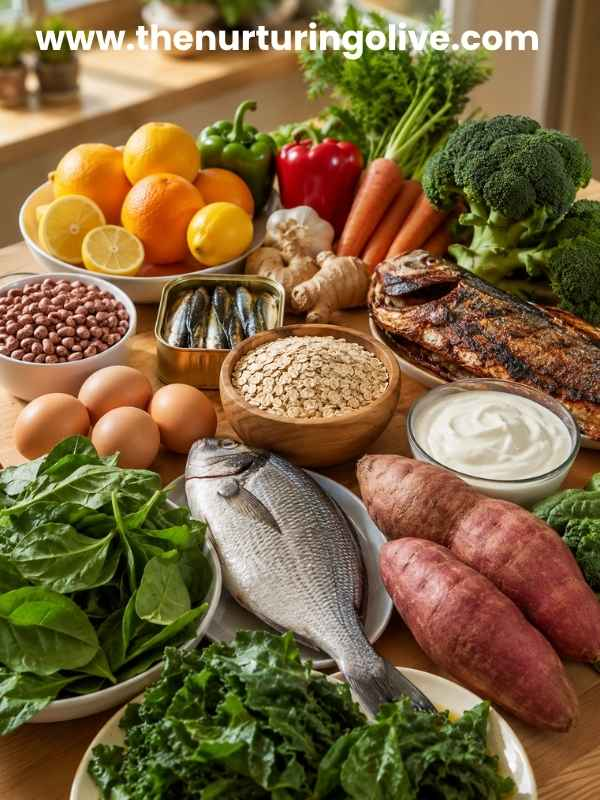
Foods That Boost Energy and Immunity for the Whole Family
Foods That Boost Energy and Immunity for the Whole Family are not found in expensive supplements or miracle products. They are often the simple, everyday ingredients that loving parents place on the table without realizing their extraordinary power.
It could be the difference between children who merely get through the day and those who thrive with strength, focus, and resilience.
Foods that boost energy and immunity for the whole family are not exotic superfoods that require a specialist shop or an inflated grocery budget. They are, in many cases, the very foods that have always been at the heart of nourishing family cooking. The challenge is not finding them. It is recognising them, understanding why they work, and making them a consistent and intentional part of what you serve at your family’s table.

As a mother, I think about this more than I let on. I want my children to move through their days with genuine energy, not the artificial kind that spikes and crashes. I want them to have the immune resilience that keeps them well through the seasons, or at least gets them back on their feet quickly when illness does come. And I want all of that to come from real food, prepared at home, in a kitchen that smells like something good is happening.
So this post is a practical guide to the foods that boost energy and immunity for the whole family, explained simply and honestly, with specific recommendations for how to bring them into your family’s meals consistently.
How Food Supports Energy and Immunity

Before we name specific foods, it helps to understand in simple terms what we are asking food to do. Energy, in the context of food and the body, comes from the steady, sustained release of fuel from the foods we eat. The best energy-supporting foods are those that deliver fuel slowly and consistently rather than rapidly and briefly.
Immunity is more complex, but it is primarily supported by specific vitamins, minerals, and plant compounds that help the immune system function at its best, reduce inflammation, and recover efficiently from infection. Vitamin C, vitamin D, zinc, iron, antioxidants, and probiotics are among the most well-evidenced immune-supporting nutrients.
The good news is that many of the most energy-sustaining and immunity-supporting foods are also affordable, widely available, and deeply rooted in Nigerian and West African food traditions. Our culture has been feeding strong immune systems and high-energy families for generations. We simply need to name what we are doing and do it with intention.
Foods That Boost Energy and Immunity: The Essential List

1. Citrus Fruits: Oranges, Lemons, and Lime
Vitamin C is one of the most well-known immunity-supporting nutrients, and citrus fruits are among its richest sources. A single medium orange provides more than the daily recommended vitamin C intake for most children. Vitamin C supports the production of white blood cells, which are the immune system’s primary defence against infection.
Squeeze fresh lemon into water every morning. Add lime to soups, stews, and smoothies. Keep a bowl of oranges visible on the kitchen table as the first snack children reach for. These simple habits deliver meaningful immune support daily without any effort or expense.
Family tip: Fresh lime juice squeezed over egusi soup or pepper soup just before serving not only brightens the flavour but adds a meaningful hit of vitamin C to an already nutritious meal.
2. Garlic and Ginger
These two ingredients, central to Nigerian cooking, are among the most extensively studied natural immune supporters available. Garlic contains allicin, a compound with demonstrated antimicrobial and antiviral properties. Ginger has potent anti-inflammatory effects and supports circulation, digestion, and recovery from respiratory illness.
The encouraging thing for Nigerian families is that garlic and ginger are already in virtually every stew, soup, and sauce we cook. We are using these ingredients daily without necessarily recognising their nutritional power. Leaning into that tradition, using fresh garlic and ginger generously rather than sparingly, is one of the simplest immunity habits a family can build.
Family tip: Add a thumb-sized piece of fresh ginger to your family’s morning smoothie. Combined with orange or mango, the flavour is pleasant and the immune benefit is real. Our Simple Smoothie Recipes for Kids and Adults post includes an immunity booster smoothie built exactly on these ingredients.
Simple Smoothie Recipes for Kids and Adults: Delicious, Nutritious, and Ready in Minutes
3. Leafy Green Vegetables
Ugu, spinach, bitter leaf, ugu, and kale are extraordinary sources of vitamins A, C, K, and folate, as well as iron and calcium. Vitamin A supports the integrity of the mucous membranes that form the first line of defence against infection. Folate supports immune cell production. Iron is essential for energy, oxygen transport, and cognitive function.
Nigerian soups and stews are one of the most efficient leafy green delivery systems in any food culture. A bowl of vegetable egusi soup provides a genuinely impressive quantity of micronutrients per serving, far more than a simple salad of the same leaves would deliver. Traditional cooking wisdom understood this. The long simmering of greens in flavourful, fat-containing sauces maximises the bioavailability of fat-soluble vitamins.
Family tip: Add an extra handful of ugu or spinach to any soup or stew in the final few minutes of cooking. It wilts almost instantly, changes the flavour minimally, and significantly increases the nutritional density of the meal.
4. Eggs
Eggs are one of the most complete, affordable, and versatile foods that boost energy and immunity available to families. They contain vitamins D and B12, both of which are essential for immune function, as well as zinc, selenium, and complete protein. Vitamin D in particular is critical for immune health, and eggs are one of the few food sources of it.
The protein in eggs supports sustained energy across the morning, making them one of the best breakfast choices for children heading into a demanding school day. Whether scrambled, boiled, fried, or baked into an omelette, eggs deserve a prominent place in your family’s weekly rotation. Our Quick Breakfast Ideas for Busy Mornings post features several egg-based breakfast ideas that work within the reality of a rushed family morning
Family tip: Hard-boil a batch of eggs on Sunday and keep them in the fridge all week. A boiled egg is one of the fastest, most nourishing snacks or breakfast additions available.
5. Oily Fish: Sardines, Mackerel, and Salmon
Oily fish are among the richest sources of omega-3 fatty acids, vitamin D, and selenium, all of which have direct immune-supporting functions. Omega-3 fatty acids reduce the inflammatory response that, when excessive, can actually suppress immune efficiency. Vitamin D regulates the immune response and is associated with reduced susceptibility to respiratory infection.
Sardines and mackerel in particular are affordable, widely available, and deeply familiar in Nigerian cooking traditions. Tinned mackerel in tomato sauce stewed with onions and peppers is a quick, budget-friendly, highly nutritious family dinner that delivers meaningful immune nutrition at very low cost. Our How to Cook Nutritious Meals on a Budget for Your Family post highlights affordable proteins like these as foundational to a nourishing budget family kitchen.
Family tip: Serve tinned sardines or mackerel in a tomato-based sauce over rice for a quick midweek dinner. Children who are introduced to these flavours early tend to grow up genuinely enjoying them.
6. Sweet Potatoes
Sweet potatoes are one of the most nutrient-dense, affordable, and child-friendly foods available. A medium sweet potato provides more than the daily recommended intake of beta-carotene, which the body converts to vitamin A. They are also rich in vitamin C, potassium, and fibre.
Roasted sweet potato wedges are among the most popular items in our family’s regular snack and side dish rotation. They are naturally sweet, satisfying, and genuinely versatile. They appear in our 10 Healthy Family Dinner Ideas collection as part of the one-pan baked chicken dinner, where their natural caramelisation at the edges makes them irresistible even to vegetable-reluctant children.
10 Healthy Family Dinner Ideas Everyone Will Love (With Full Recipes)
Family tip: Roast a large tray of sweet potato chunks on Sunday. Use them as a side dish, add them to soups, or serve as a snack with yoghurt dip throughout the week.
7. Legumes: Beans, Lentils, and Black-Eyed Peas
Legumes are the most underappreciated energy and immunity foods in the family kitchen. They are extraordinarily rich in plant-based protein, iron, zinc, folate, and fibre. Iron supports oxygen transport throughout the body and is directly linked to energy levels, particularly in growing children and women of childbearing age. Zinc is one of the most critical minerals for immune function.
Black-eyed beans, a cornerstone of Nigerian cooking and the base of akara and moi moi, are genuinely excellent sources of all of these nutrients. Honey beans and brown beans, used in traditional bean porridge, are equally impressive nutritionally. These are not budget compromises. They are nutritional champions that belong at the centre of a family’s weekly meals.
Family tip: Cook beans in double quantity whenever you make them. Freeze half in meal-sized portions for future dinners that require almost no effort.
8. Natural Yoghurt and Fermented Foods
The gut is now understood to be one of the most important sites of immune activity in the body. A healthy gut microbiome supports immune function, reduces inflammation, and helps the body respond efficiently to infection. Fermented foods, particularly natural yoghurt with live cultures, directly support gut health through the delivery of beneficial bacteria.
Natural yoghurt features prominently in our Simple Smoothie Recipes for Kids and Adults as a consistent base ingredient, and for good reason. It provides protein, calcium, and probiotics in a format that children find genuinely appealing. Serve it with fruit and granola as a breakfast. Use it as a dip for vegetable sticks. Add it to smoothies. Keep it in the fridge and use it generously.
Simple Smoothie Recipes for Kids and Adults: Delicious, Nutritious, and Ready in Minutes
Family tip: Choose natural yoghurt with live cultures rather than flavoured varieties, which are usually high in added sugar and may not contain active probiotic cultures.
9. Whole Grains: Oats, Brown Rice, and Whole Wheat
Whole grains provide sustained energy through their slower digestion and lower glycaemic impact compared to refined carbohydrates. They also contain B vitamins that support energy metabolism, zinc and selenium for immune function, and fibre that feeds the beneficial gut bacteria linked to immune health.
Oats in particular are one of the most versatile and affordable whole grain options for families. Overnight oats, oat-based energy bites, baked oatmeal, and porridge are all quick preparations that deliver meaningful nutrition. Brown rice used in our weekly family meal plans provides sustained energy and better nutritional value than white rice, especially for active children.
Family tip: If your family resists brown rice, try mixing it half and half with white rice. The texture and flavour difference becomes minimal while the nutritional improvement is real.
10. Water and Hydration
No list of foods that boost energy and immunity for the whole family is complete without addressing hydration. Water is not a food, strictly speaking. However, adequate hydration is one of the most direct and most overlooked supports for both energy and immune function. Even mild dehydration reduces cognitive performance, physical energy, and the efficiency of immune responses.
Encourage children to drink water consistently throughout the day rather than only when thirsty. Offer hibiscus water or zobo at room temperature as a naturally flavoured, antioxidant-rich alternative to sugary drinks. Add fresh lime or lemon to water for vitamin C and flavour. The habit of drinking water, established early, is one of the most enduring health gifts a parent can give.
Bringing These Foods Together in a Nourishing Family Week
The most effective approach to consistently feeding your family these energy and immunity-boosting foods is not to introduce them all at once but to build them into your regular weekly rotation deliberately.
Use your weekly family meal plan as the vehicle. When you plan for egusi soup, you are already including leafy greens and legumes. When Tuesday’s dinner is baked salmon or tinned mackerel in tomato sauce, you are delivering omega-3 fatty acids and vitamin D. And when Wednesday’s breakfast is a smoothie with spinach, banana, and yoghurt, you are covering vitamin C, probiotics, and folate before the school day begins.
The planning and cooking frameworks we have built across this food series, the 10 Healthy Family Dinner Ideas post with its full recipes, the Easy Meal Prep Ideas for Busy Families system, the Quick Breakfast Ideas for Busy Mornings collection, and the Healthy Nigerian Meals for Families balanced diet guide, all work together to make this kind of consistent, intentional family nutrition genuinely achievable in a real, busy household.
Simple Ways to Include More Immunity-Boosting Foods Daily
You do not need to overhaul your kitchen overnight. Here are small, sustainable additions that increase the energy and immunity content of your family’s daily eating without requiring new recipes or extra cooking time:
- Add a handful of spinach or ugu to any soup, stew, or smoothie
- Squeeze fresh lemon or lime over meals before serving
- Replace a packaged snack with an orange, a boiled egg, or apple slices with peanut butter
- Stir a tablespoon of natural yoghurt into children’s porridge or smoothie
- Use garlic and fresh ginger generously in all cooking rather than sparingly
- Swap white rice for brown rice two to three times per week
- Keep a bowl of seasonal fruit visible and within reach on the kitchen counter
FAQs about Foods That Boost Energy and Immunity
Are vitamin supplements necessary if my family eats well?
For most families who eat a varied, nourishing diet, supplementation is not necessary for the majority of nutrients. Vitamin D is an exception, particularly in households with limited sun exposure, as it is difficult to obtain in sufficient quantities from food alone. A good paediatrician or family doctor can advise on whether supplementation is appropriate based on your family’s specific circumstances.
How quickly do dietary changes affect immunity?
Improvements in gut health from increased fibre and probiotic foods can begin to show within a few weeks. Broader immune changes take longer and are cumulative. The consistent daily practice of eating nourishing foods builds immune resilience gradually, over months and years, rather than overnight. Think of it as long-term investment in your family’s health rather than a short-term cure.
What are the best immunity-boosting foods for young children specifically?
Eggs, sweet potatoes, natural yoghurt, citrus fruits, leafy greens in soups, oats, and legumes are all excellent for young children. These are gentle, familiar, nutritious, and easily incorporated into the foods children already eat. Introducing them early and consistently, as described in our How to Encourage Healthy Eating Habits in Children post, builds both the nutritional foundation and the food acceptance that supports long-term health.
Final Thoughts on Foods That Boost Energy and Immunity
The foods that boost energy and immunity for the whole family are already in your kitchen, or they should be. They are in the pot of egusi on your stove. They are in the eggs in your fridge. And, they are also in the bowl of oranges on your counter and the bag of lentils in your cupboard and the natural yoghurt that your children add to their smoothies before school.
You do not need a complicated nutrition plan to feed your family well. You need consistency, variety, and the confidence to trust what your culture and your kitchen have always known: that real food, prepared with care and eaten together, is the most powerful medicine available. Keep serving the foods that boost energy and immunity. Your family’s health is being built, one meal at a time.
Let’s Hear From You!
Which immunity-boosting food does your family eat most regularly? Is there one on this list you want to introduce this week? Share in the comments below. And if this post helped you think about your family’s nutrition differently, please share it with another mother who needs this encouragement. Use the hashtags #thenurturingolive and #lorettaginikachimemoh.
You might also enjoy:
- Healthy Nigerian Meals for Families: A Balanced Diet Guide
- 10 Healthy Family Dinner Ideas Everyone Will Love
- Simple Smoothie Recipes for Kids and Adults
- How to Encourage Healthy Eating Habits in Children
- How to Cook Nutritious Meals on a Budget for Your Family
Closing Note
Every nourishing meal you place on the table for your family is an investment in their future. In the energy they will bring to their schoolwork, their play, their friendships, and one day their own families. Feed them well. It matters more than you know, and it will last longer than you can imagine.
If you enjoy content like this Nutritious Meals on a Budget for your family, we would love to stay connected with you. Follow us on Facebook for our daily posts on parenting, faith, family life, and nutritious food ideas that help families live healthier and happier lives.
Facebook: The Nurturing Olive
Thank you for stopping by, and God bless you.

